
10 Best Temples in Bangkok You Must Visit
Bangkok has thousands of temples. Nobody needs to see all of them. These ten cover the gold, the marble, the giants, the quiet corners tourists skip, everything that earns a spot on any list of temples to visit in Bangkok. Some charge 500 baht. One is free. All ten are genuinely must see temples in Bangkok, not padding to hit a round number.
Every Bangkok temple here made the cut for a reason, not just because it’s old. If you only have time for a handful, the ranking below tells you which ones matter most and why. These are the best temples in Bangkok, full stop.
1. Wat Phra Kaew and the Grand Palace
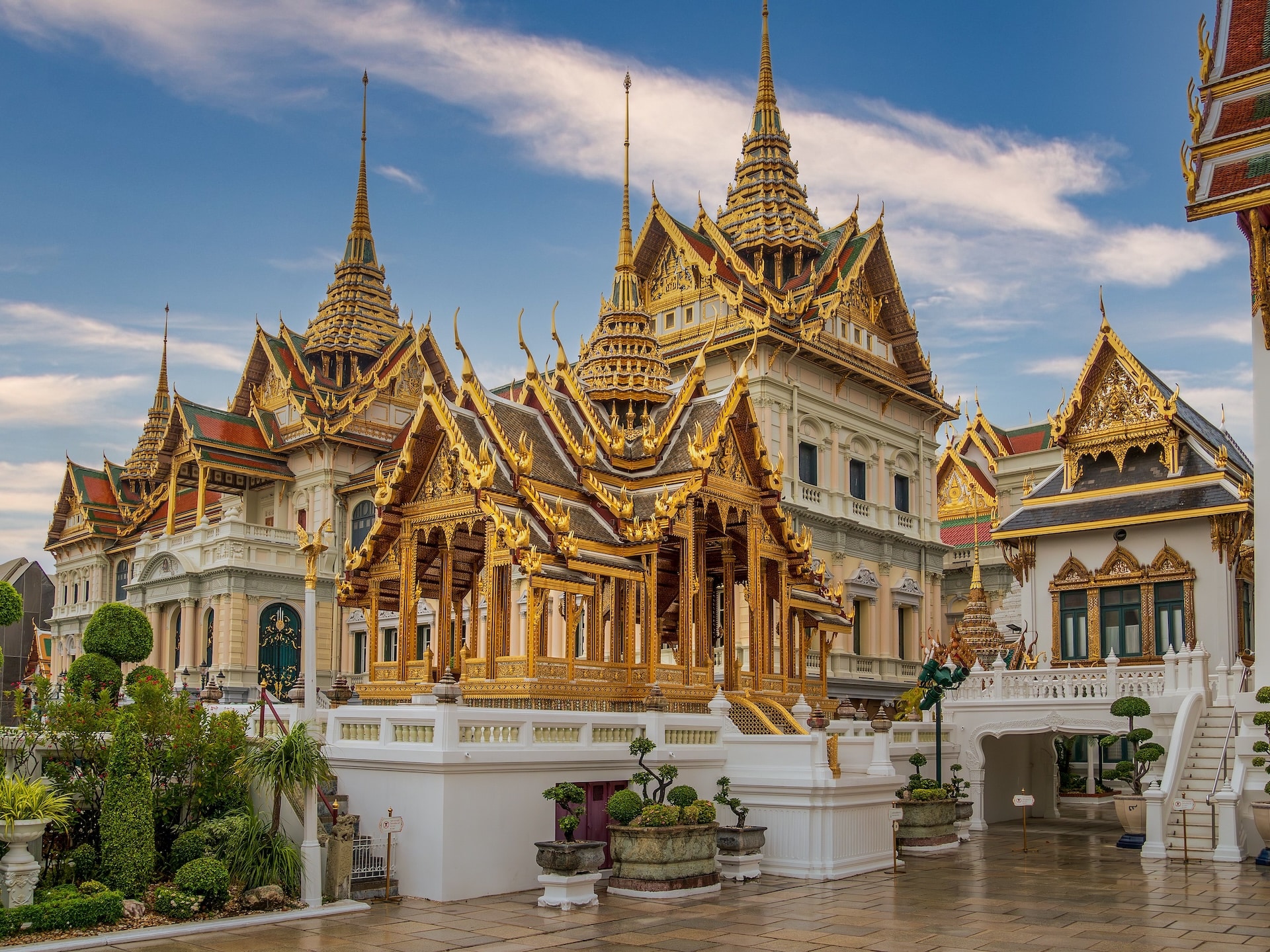
Start here if you start anywhere. The Emerald Buddha sits inside Wat Phra Kaew, within the Grand Palace walls King Rama I raised in 1782. Entry is 500 baht, and the ticket also covers the Queen Sirikit Museum of Textiles on the same grounds. Gates open 8.30 am, close to visitors by 3.30 pm. Cover your shoulders and knees, no exceptions here, this is the most photographed Bangkok temple in the country.
2. Wat Pho
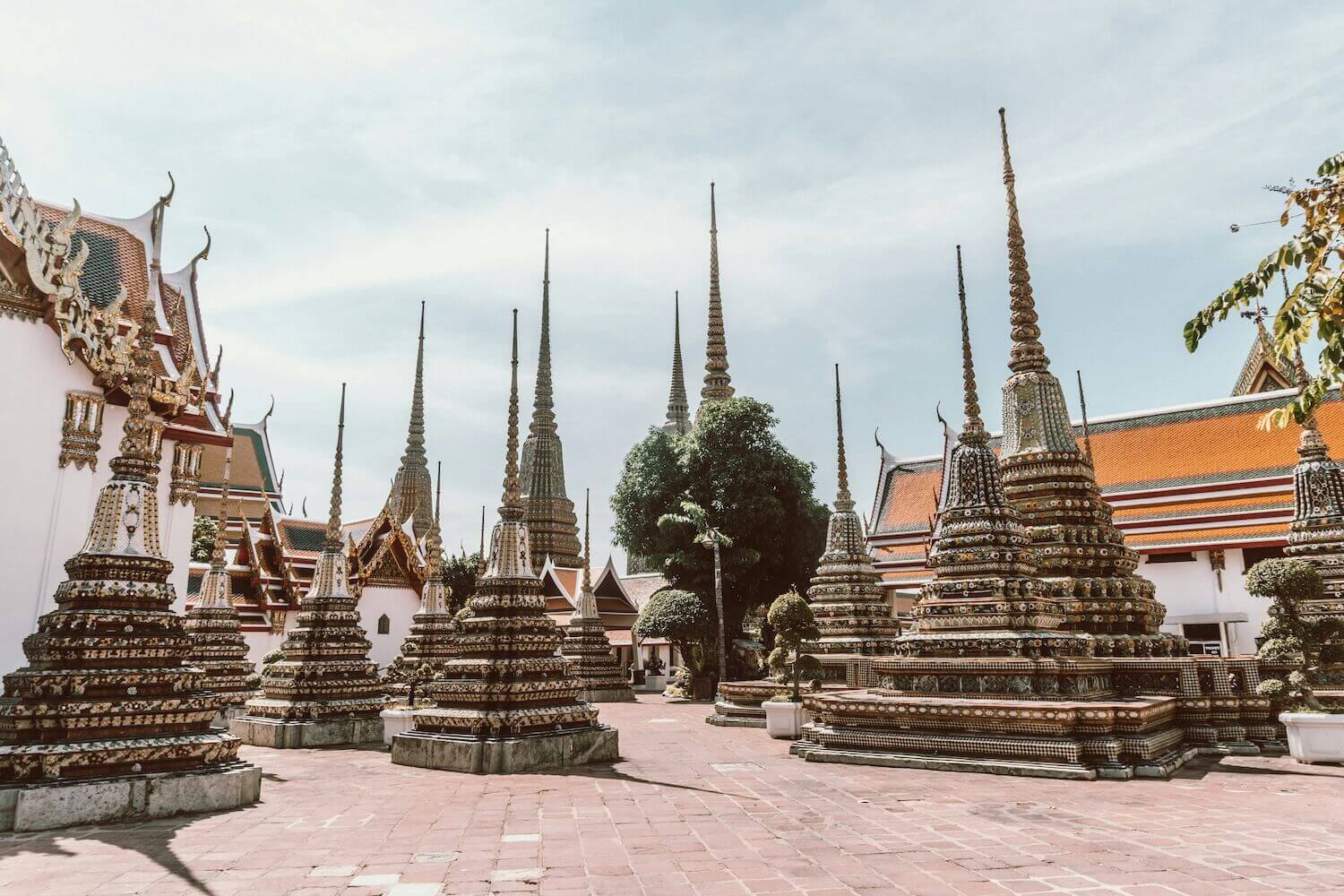
Next door, and worth the extra ticket. The reclining Buddha inside runs 46 metres long, 15 metres tall, covered in gold leaf from head to foot. Entry costs 300 baht as of 2026, raised from previous years to help fund ongoing restoration work. Open daily from 8 am.
3. Wat Arun
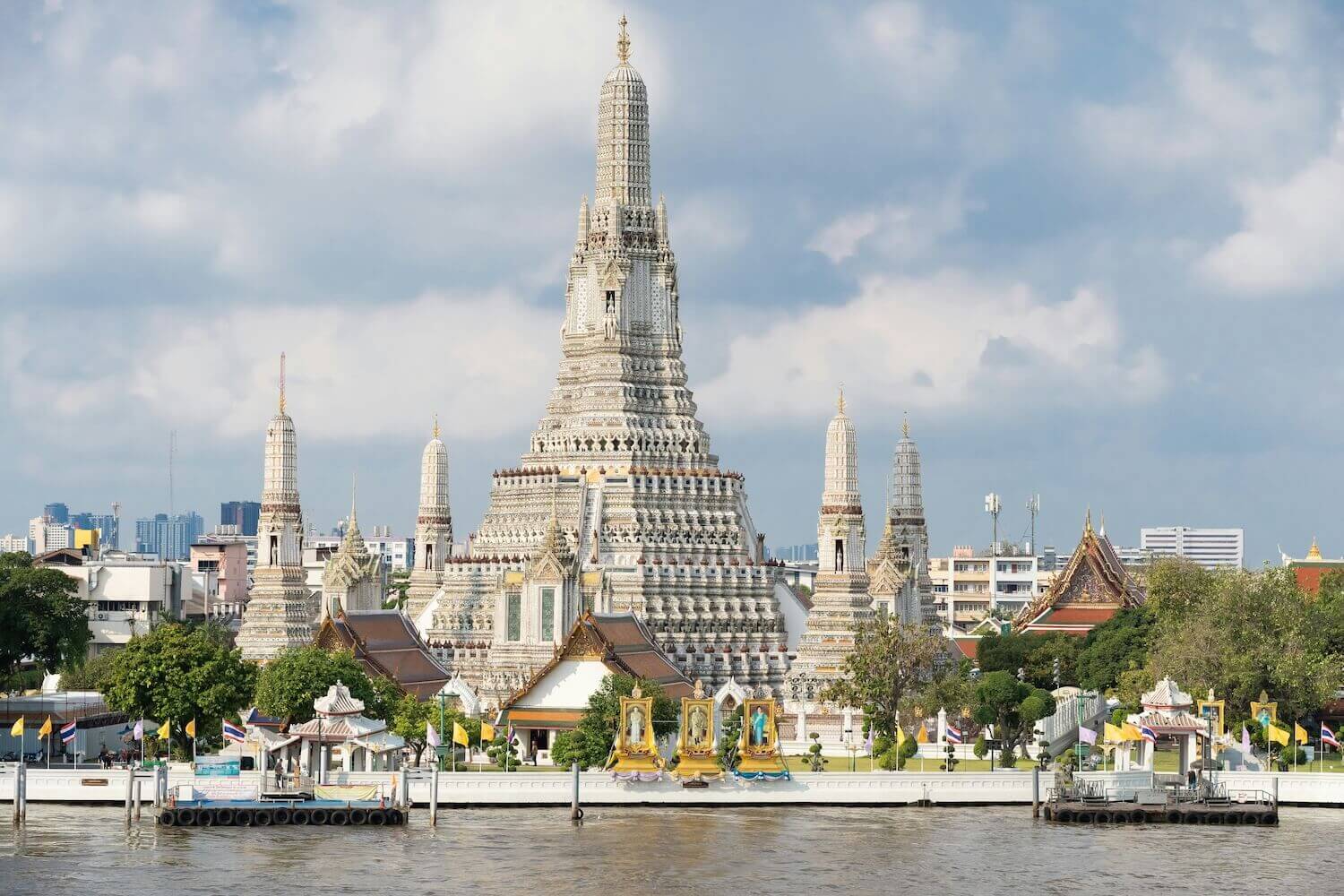
Cross the river to reach this one. The Temple of Dawn’s central prang is covered edge to edge in broken Chinese porcelain, and it photographs best from the far bank at Tha Tien around sunset. Entry is 200 baht. A cross river ferry gets you there in under three minutes.
4. Wat Traimit, the Golden Buddha
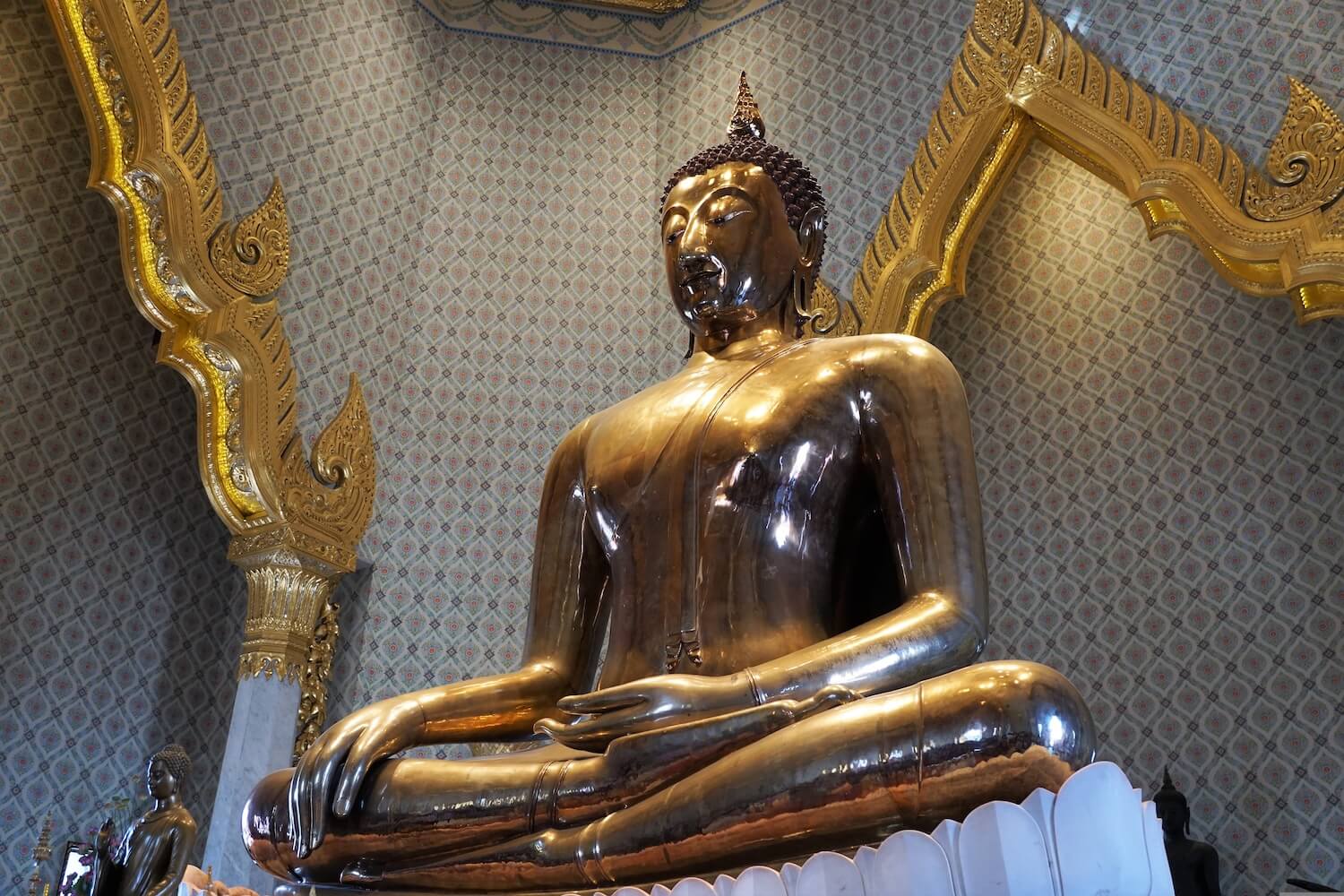
Hidden in plain sight for centuries. The seated Buddha here is 5.5 tonnes of solid gold, discovered by accident in 1955 when a plaster casing cracked during a move and gold showed through underneath. Forty baht gets you into the hall, another hundred into the museum below it. Located right at the edge of Chinatown.
5. Wat Saket, the Golden Mount
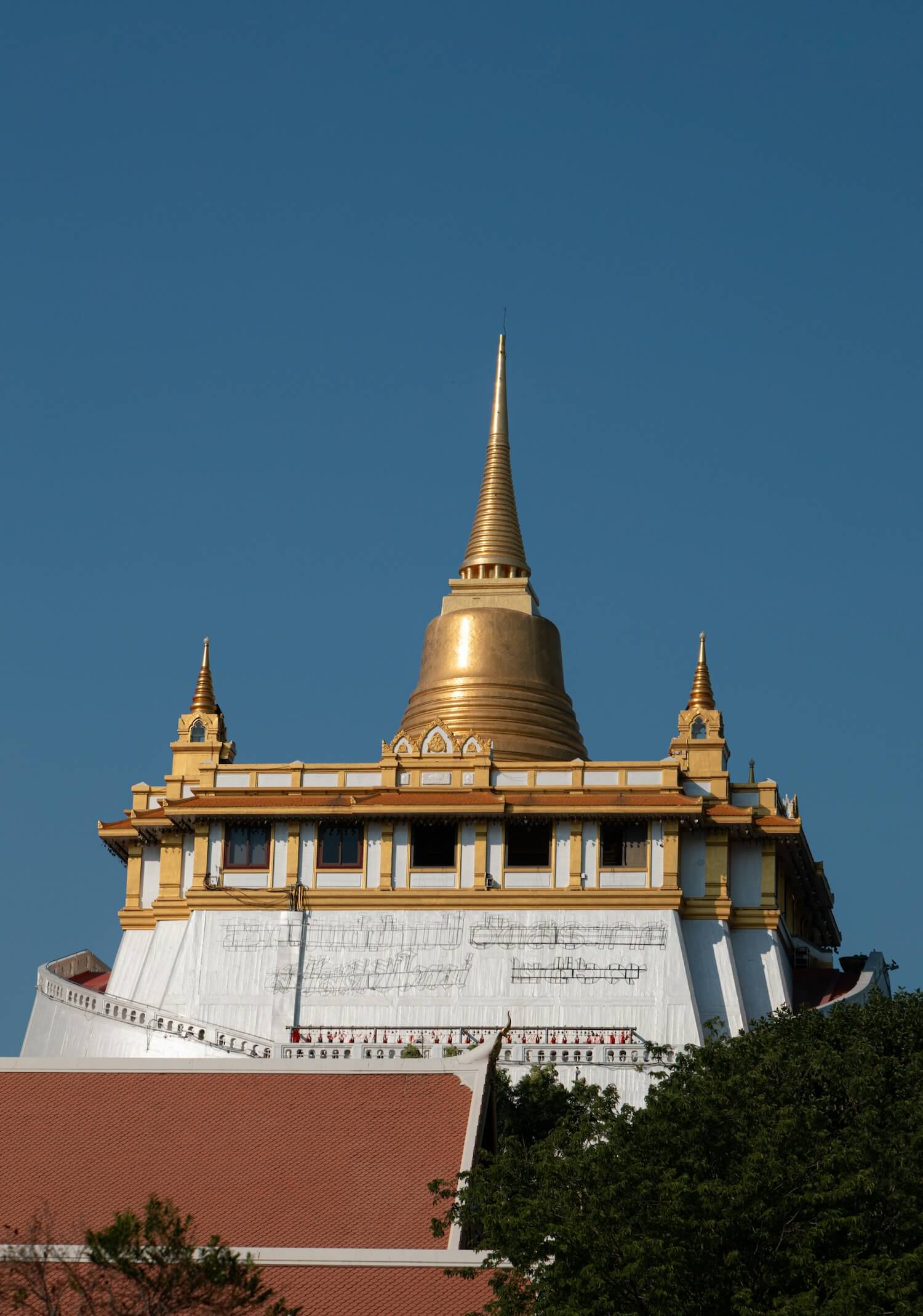
Climb for the view, not just the temple. More than 300 steps lead up an artificial hill to a golden chedi roughly 80 metres above street level, and the top gives one of the few genuine panoramas over old Bangkok. Entrance runs around 100 baht. Go late afternoon for the light, or evening for sunset.
6. Wat Benchamabophit, the Marble Temple
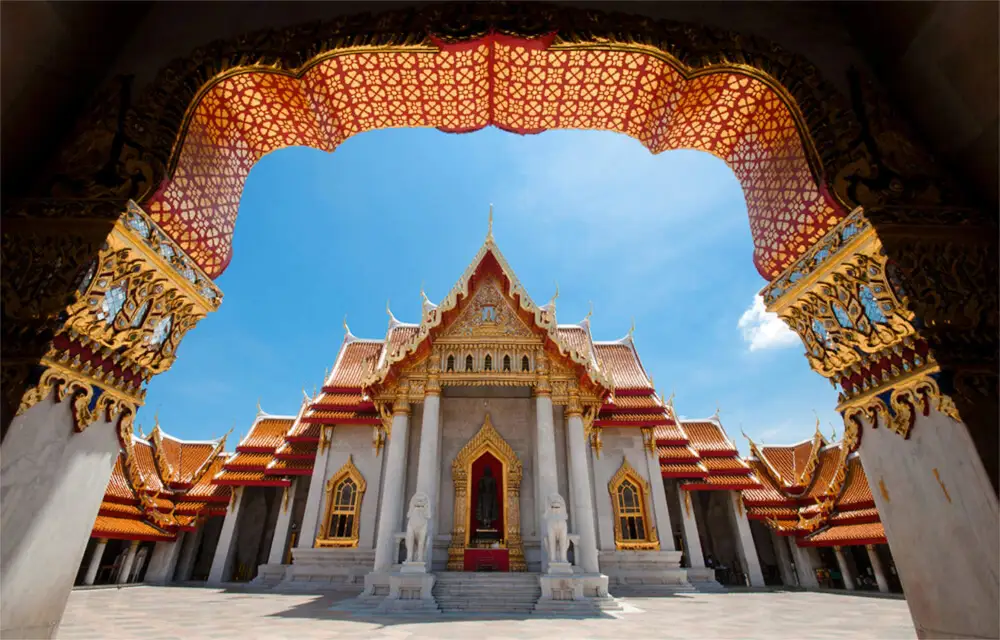
Everything here is Italian Carrara marble, imported specifically for the job in 1899 under King Rama V. It’s the temple visitors compare to European architecture rather than Thai, and it earns the comparison. Expect a small entrance fee, worth confirming at the gate since reported prices vary. Quieter than most temples on this list, which is part of the appeal.
7. Wat Suthat and the Giant Swing
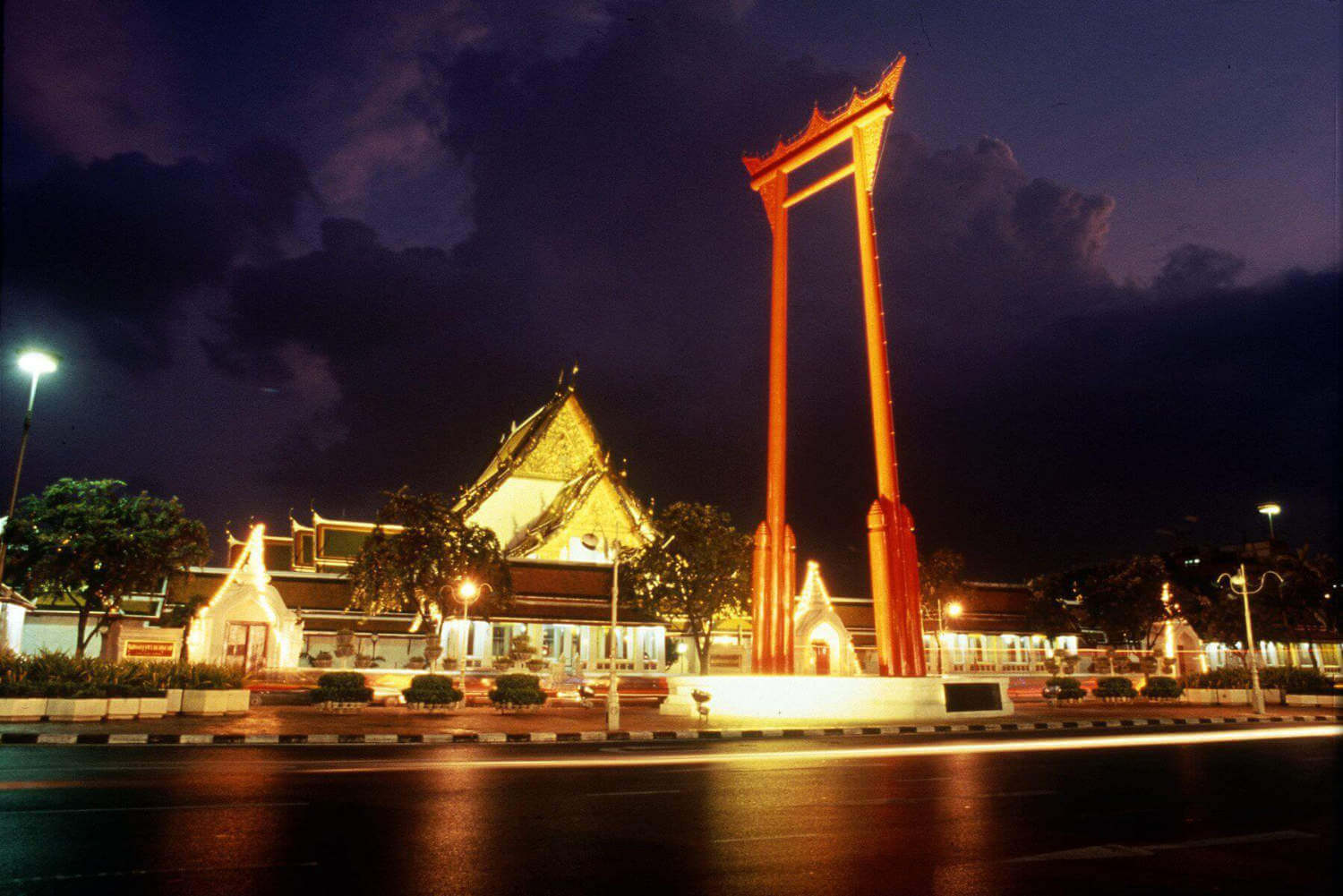
The red swing standing outside is free to see and impossible to miss, over 21 metres tall, once used in a ceremony where young men tried to grab a bag of coins mid air. Inside, a Sukhothai era Buddha statue that King Rama I had brought specifically for this temple. A small entrance fee applies to the grounds themselves.
8. Wat Ratchanatdaram, the Loha Prasat
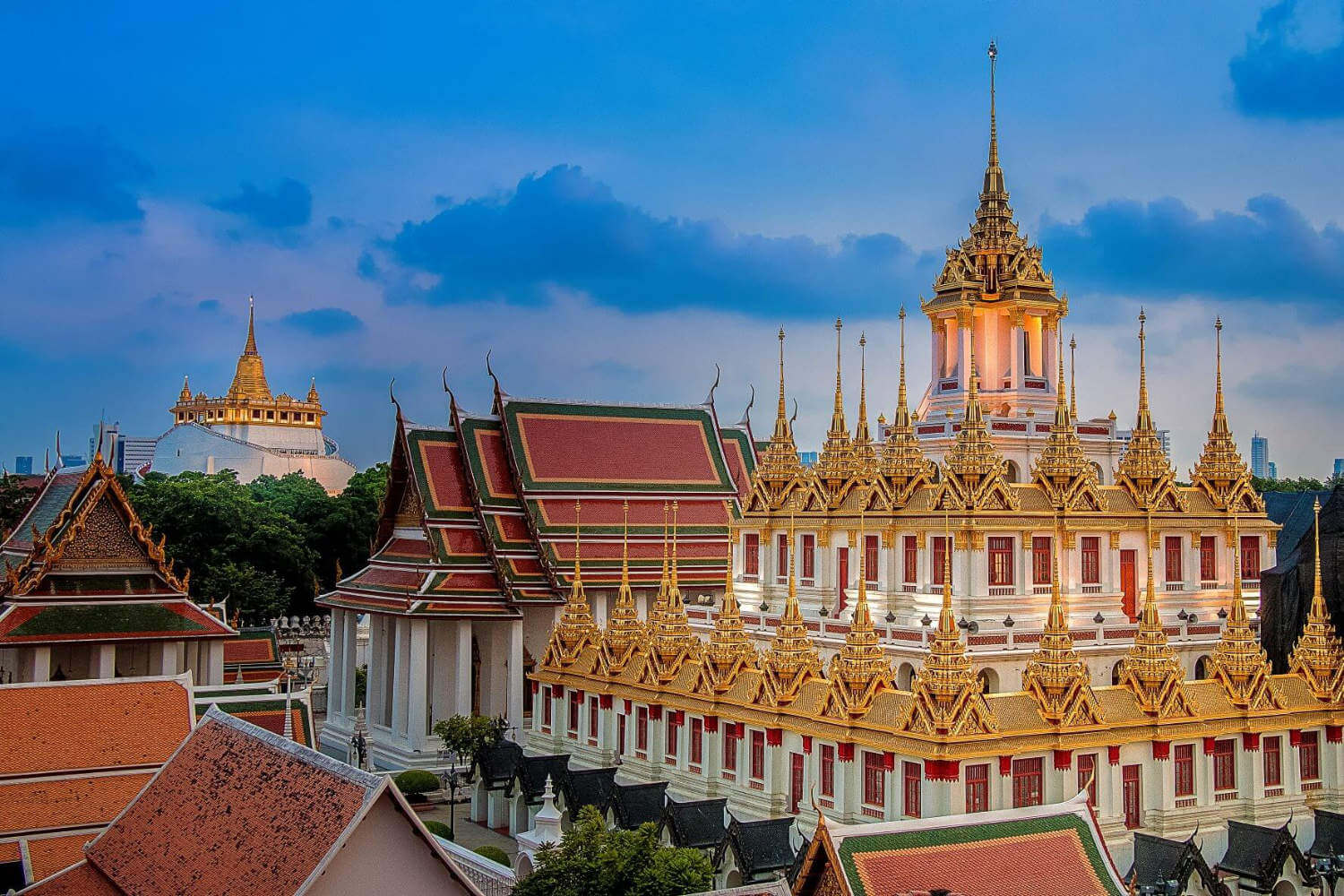
Thirty seven gilded spires arranged in three tiers, roughly 38 metres tall, built as a meditation space rather than a monument. It’s the metal answer to the golden chedis elsewhere on this list, inspired by similar structures in India and Sri Lanka. Right next to Wat Saket, so pair the two.
9. Wat Mahathat and the Amulet Market
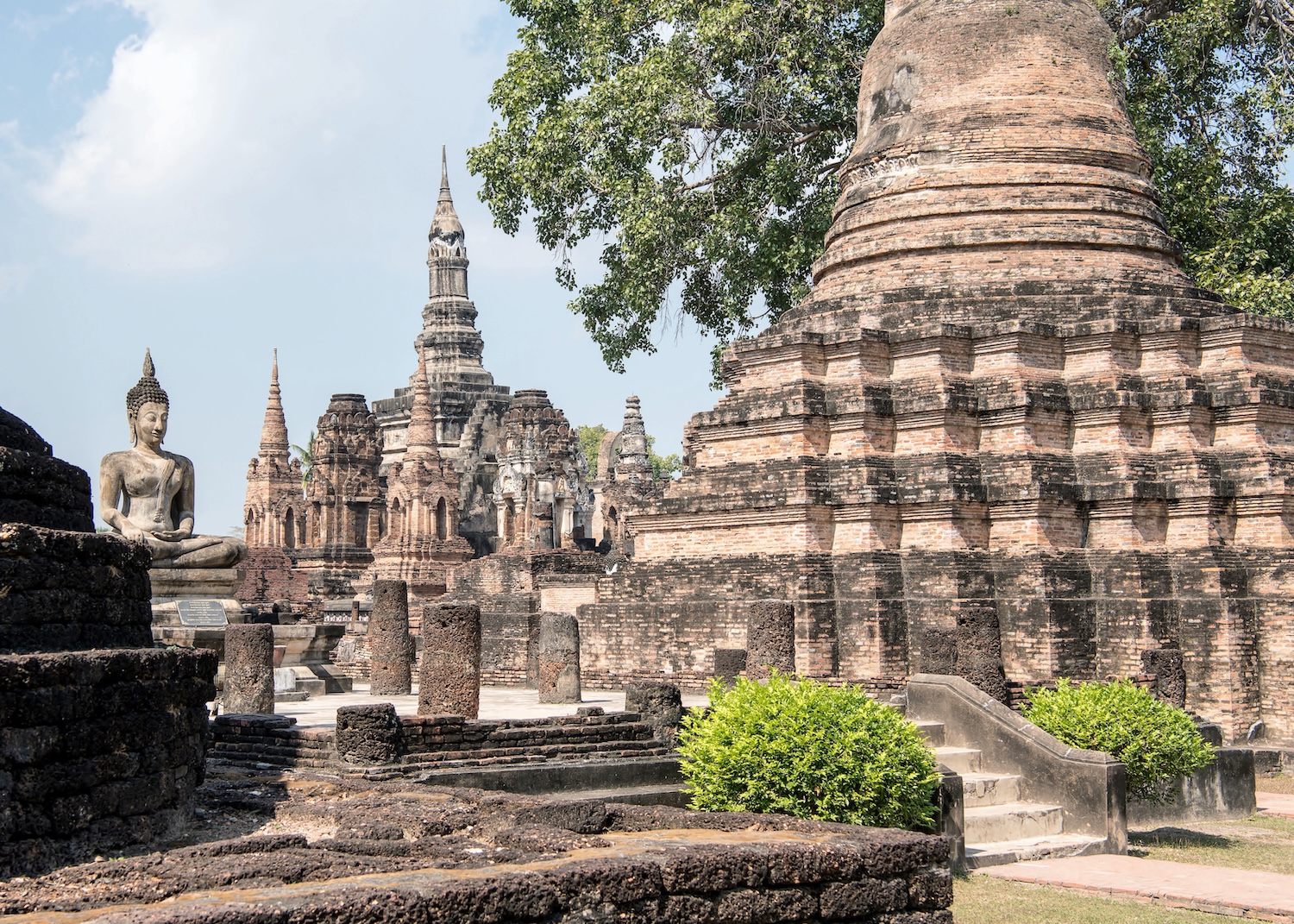
No entrance fee here, and English language meditation classes run daily if you want to sit rather than sightsee. Across the road, Bangkok’s biggest amulet market spreads along Maharat Road, stalls of charms, talismans and old coins that locals actually buy, not tourist souvenirs.
10. Wat Kalayanamit
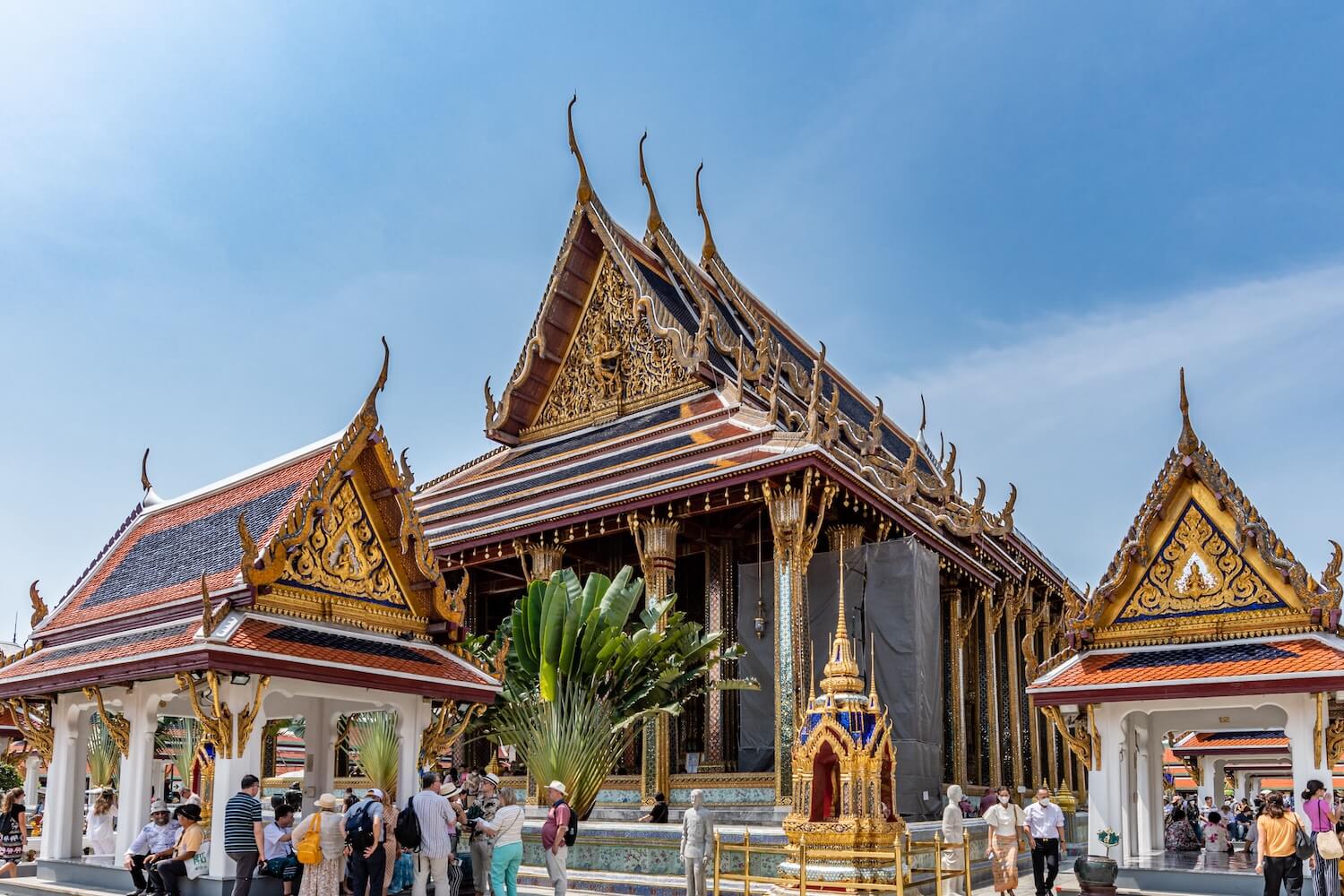
Fewer tourists make it across the river for this one, which is exactly the draw. A giant seated Buddha dominates the main hall, and a large bell outside gets rung three times by visitors making a wish. About fifteen minutes on foot from Wat Arun, on the Thonburi side.
Quick Reference
| Temple | Entrance Fee | Known For |
| Wat Phra Kaew / Grand Palace | 500 THB | Emerald Buddha |
| Wat Pho | 300 THB | Reclining Buddha |
| Wat Arun | 200 THB | Riverside prang |
| Wat Traimit | 40 to 140 THB | Solid gold Buddha |
| Wat Saket | around 100 THB | Golden Mount view |
| Wat Benchamabophit | small fee, varies | Italian marble |
| Wat Suthat | small fee | Giant Swing |
| Wat Ratchanatdaram | small fee | Loha Prasat spires |
| Wat Mahathat | free | Meditation, amulet market |
| Wat Kalayanamit | free | Giant seated Buddha |
Ten temples, four free or nearly free, none of them requiring a full day. Pick three or four and you’ll still see more than most visitors manage in a week. Sukhumvit puts you close to plenty of temples to visit in Bangkok, PIPA Hotel Bangkok among the closest bases. Book your stay at PIPA Hotel Bangkok.
FAQs
1. What to wear to a temple in Bangkok?
Local vendors outside most temples sell inexpensive elephant pants and t-shirts if you turn up unprepared. Note that at the Grand Palace, simply draping a scarf over a sleeveless top is strictly rejected, your shirt must have actual sleeves.
2. What are the must see temples in Bangkok for a first visit?
Wat Phra Kaew, Wat Pho and Wat Arun cover the classics in a single morning. Add Wat Traimit if you’re already in Chinatown, it takes twenty minutes and the Golden Buddha is worth the detour.
3. Are Bangkok’s temples free to enter?
Some are. Wat Mahathat and Wat Kalayanamit charge nothing. The bigger, more famous ones, Grand Palace, Wat Pho, Wat Arun, all charge between 200 and 500 baht.
4. How many temples should I visit in Bangkok?
Three or four in a day is realistic without temple fatigue setting in. Ten across three days works if you space them across mornings and skip the afternoon heat.
5. Is it worth hiring a guide for Bangkok’s temples?
For the Grand Palace and Wat Pho, yes, a guide catches details easy to miss alone, like the mother of pearl inlay on the reclining Buddha’s feet. For smaller temples like Wat Kalayanamit, wandering alone works just as well.