5 Best Floating Markets near Bangkok You Shouldn’t Miss

5 Best Floating Markets near Bangkok You Shouldn’t Miss

Bangkok’s canals used to be how the city moved goods around, before roads took over. A handful of markets still work the old way, boats loaded with fruit and noodles, vendors calling out prices from the water, the genuine river market Bangkok experiences most visitors’ pictures and is rarely found at the bigger tourist stops. Five of them are genuinely worth the trip, some inside the city, some an hour or two out. This covers every proper floating market Bangkok has to offer within a reasonable day trip, and it’s a solid starting point if you’re weighing up which ones actually deserve a spot on the itinerary.

Two are open daily. Three run weekends only. One turns into Thailand’s best known night floating market once the sun goes down. Here’s what each one actually offers, and how to get there.
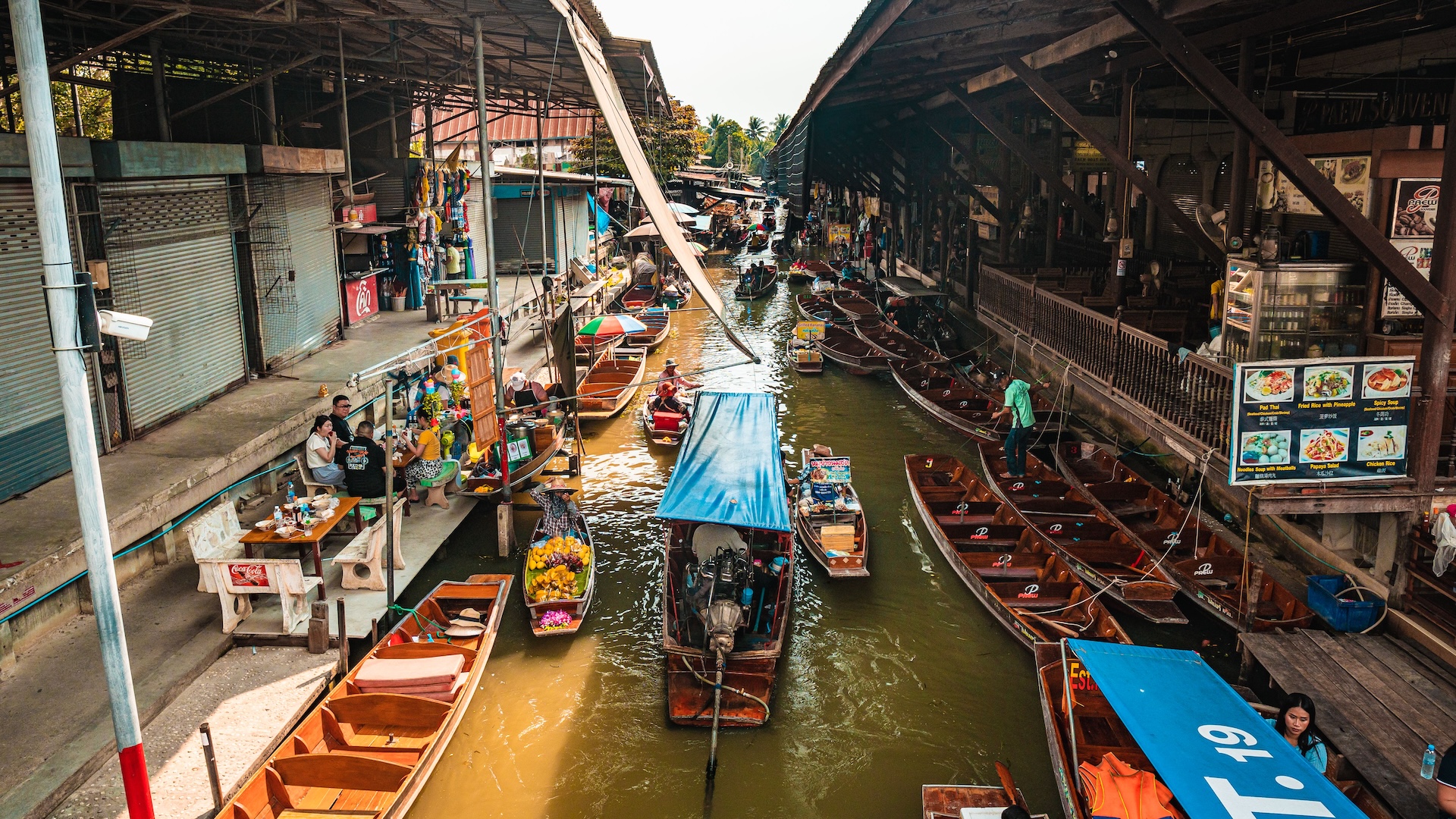
High-angle view of wooden longtail boats navigating a canal flanked by covered shopfronts at a Thai floating market.

1. Taling Chan Floating Market

Inside Bangkok proper, no day trip required. Taling Chan opens Saturdays, Sundays and public holidays from 8 am to around 4.30 pm, and admission is free. A free electric shuttle bus connects Bang Khun Non MRT Station to the market directly, along with a few others nearby. Smaller and calmer than Damnoen Saduak, with grilled seafood and boat noodles cooked right on the water.

2. Khlong Lat Mayom Floating Market

A few minutes from Taling Chan, and noticeably more local. Khlong Lat Mayom runs the same weekend hours, roughly 8 or 9 am to 5 pm, and shares the same free shuttle from Bang Khun Non MRT. Most vendors here sell to Thai regulars rather than tour groups, so English signage is thin on the ground, part of what makes it feel genuine.

3. Bang Nam Phueng Floating Market

Set inside Bang Krachao, the patch of jungle and canals known locally as Bangkok’s green lung. Bang Nam Phueng opens Saturdays and Sundays, roughly 8 am to 2 pm, and it leans more towards land-based stalls than boats, though a few vendors still sell from the water. Reach it by ferry from the Khlong Toei side of the river, then a short songthaew or bike ride in. Combine it with cycling the island’s raised canal paths.

4. Damnoen Saduak Floating Market

The one everyone pictures when they think of a “floating market.” Damnoen Saduak is about 90 minutes from central Bangkok in Ratchaburi province, and it runs daily from around 7 am to 11 am, mornings only. Longtail boats stacked with fruit, vegetables and handmade goods crowd the canals, and you can eat lunch straight off someone’s boat. Go early. It gets busy, and hot, by mid morning.

5. Amphawa Floating Market

This is a real night floating market in Thailand. Amphawa runs Friday to Sunday, roughly 2 pm to 8 or 9 pm, so it has a completely different rhythm to the dawn rush at Damnoen Saduak. Entry is free. After dark, longtail boats head out onto the Mae Klong River for firefly tours, thousands of them flashing in the trees along the banks. It’s not in Bangkok itself, but it’s nearby, about 90 km southwest of the city, or 1.5 to 2 hours by road.

Getting There, at a Glance

Market Days Open Distance from Central Bangkok Best For
Taling Chan Sat, Sun, holidays Inside the city An easy half day, no long drive
Khlong Lat Mayom Sat, Sun, holidays Inside the city A more local, less touristy version
Bang Nam Phueng Sat, Sun About 30 to 40 minutes Combining with a Bang Krachao bike ride
Damnoen Saduak Daily, mornings About 90 minutes The classic postcard market
Amphawa Fri to Sun, afternoon into evening About 1.5 to 2 hours Fireflies and a proper night market


Two of these need a full day out. Three don’t. If you’re short on time, Taling Chan or Khlong Lat Mayom get you a genuine river market Bangkok experience without giving up your whole morning. PIPA Hotel Bangkok sits in Sukhumvit, a manageable taxi ride from either. Book your stay at PIPA Hotel Bangkok and build a market morning into the trip.

FAQs

1. How to get to the floating market in Bangkok?

Depends which one. Taling Chan and Khlong Lat Mayom are reachable by MRT to Bang Khun Non Station, then a free weekend shuttle bus. Damnoen Saduak and Amphawa are further out, best reached by taxi, minivan from the Southern Bus Terminal, or an organised tour. Bang Nam Phueng needs a ferry crossing from the Khlong Toei side of the river.

2. What is the best floating market in Bangkok for first-time visitors?

Damnoen Saduak if you want the classic postcard scene everyone pictures when they hear ” best floating market Bangkok.” Taling Chan if you’d rather not lose a whole morning to travel, and still want the real thing rather than a watered down version.

3. Is there a night floating market in Thailand near Bangkok?

Yes, Amphawa. It runs Friday to Sunday evenings and is the one most associated with after dark boat rides and firefly tours, rather than the usual dawn rush.

4. Are Bangkok’s floating markets open every day?

No, most aren’t. Damnoen Saduak is the exception and runs daily mornings. Amphawa, Taling Chan, Khlong Lat Mayom and Bang Nam Phueng all operate weekends only, plus public holidays for some.

5. How much time should I budget for a floating market visit?

Two to three hours covers most of them properly, more time than that and you’re mostly just re-eating the same few dishes. Damnoen Saduak and Amphawa work well as a half day trip once travel time is factored in, since neither is inside the city. Build in extra time for the drive if you’re going during the rainy season, June through October, when Bangkok traffic slows down considerably in a downpour.
10 Best Temples in Bangkok You Must Visit

10 Best Temples in Bangkok You Must Visit

Bangkok has thousands of temples. Nobody needs to see all of them. These ten cover the gold, the marble, the giants, the quiet corners tourists skip, everything that earns a spot on any list of temples to visit in Bangkok. Some charge 500 baht. One is free. All ten are genuinely must see temples in Bangkok, not padding to hit a round number.

Every Bangkok temple here made the cut for a reason, not just because it’s old. If you only have time for a handful, the ranking below tells you which ones matter most and why. These are the best temples in Bangkok, full stop.

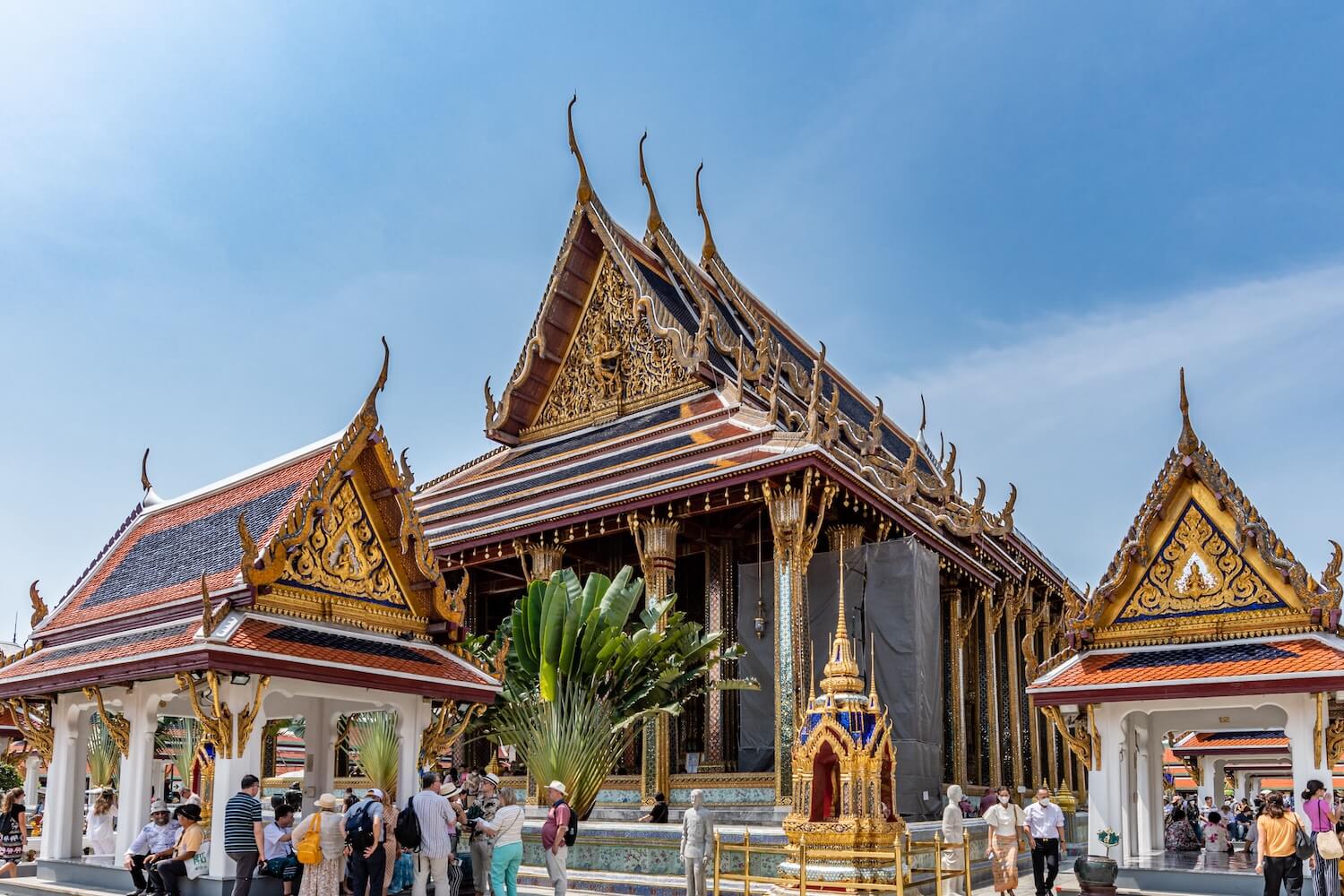
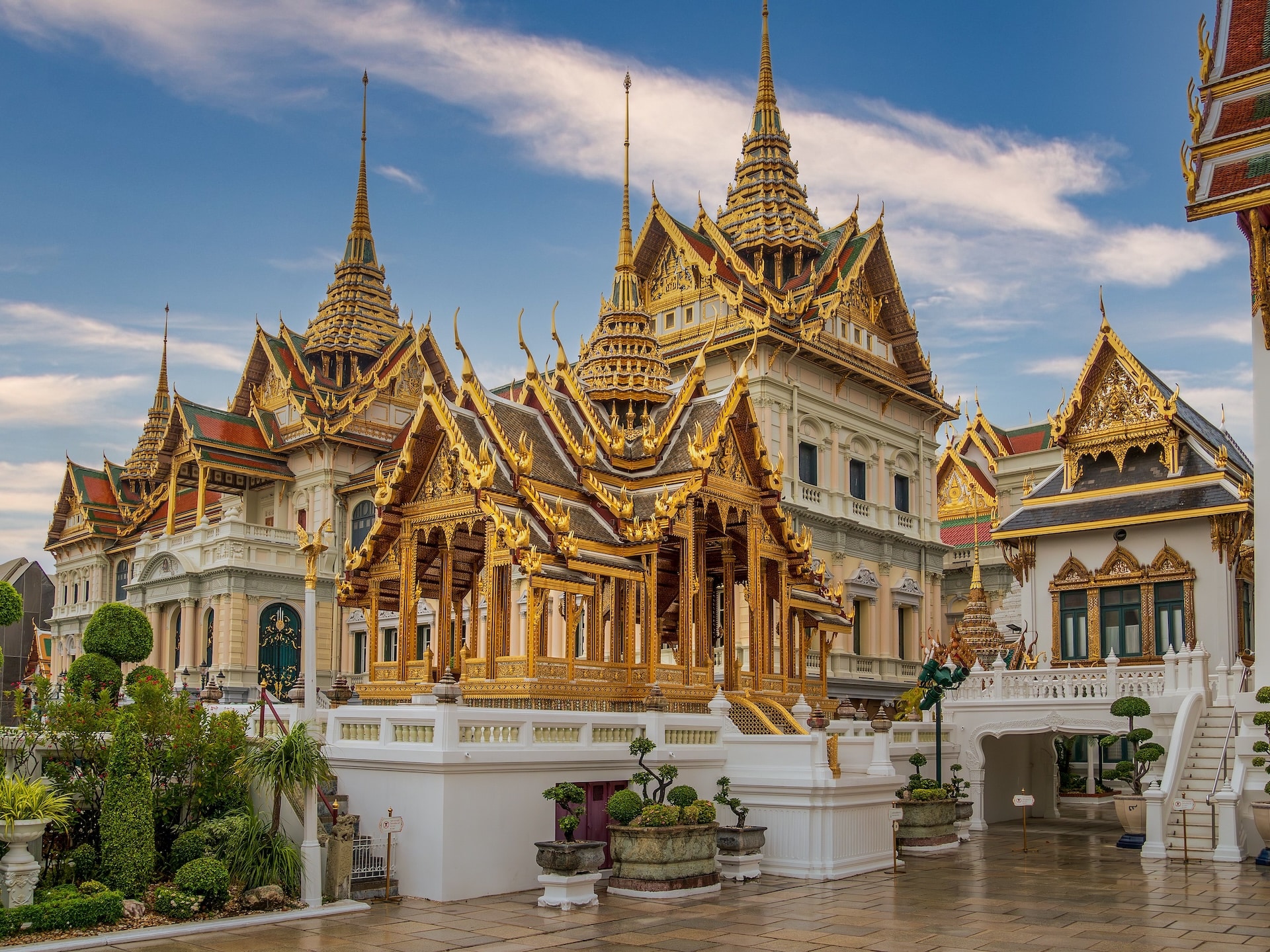
1. Wat Phra Kaew and the Grand Palace

The Grand Palace in Bangkok

Start here if you start anywhere. The Emerald Buddha sits inside Wat Phra Kaew, within the Grand Palace walls King Rama I raised in 1782. Entry is 500 baht, and the ticket also covers the Queen Sirikit Museum of Textiles on the same grounds. Gates open 8.30 am, close to visitors by 3.30 pm. Cover your shoulders and knees, no exceptions here, this is the most photographed Bangkok temple in the country.

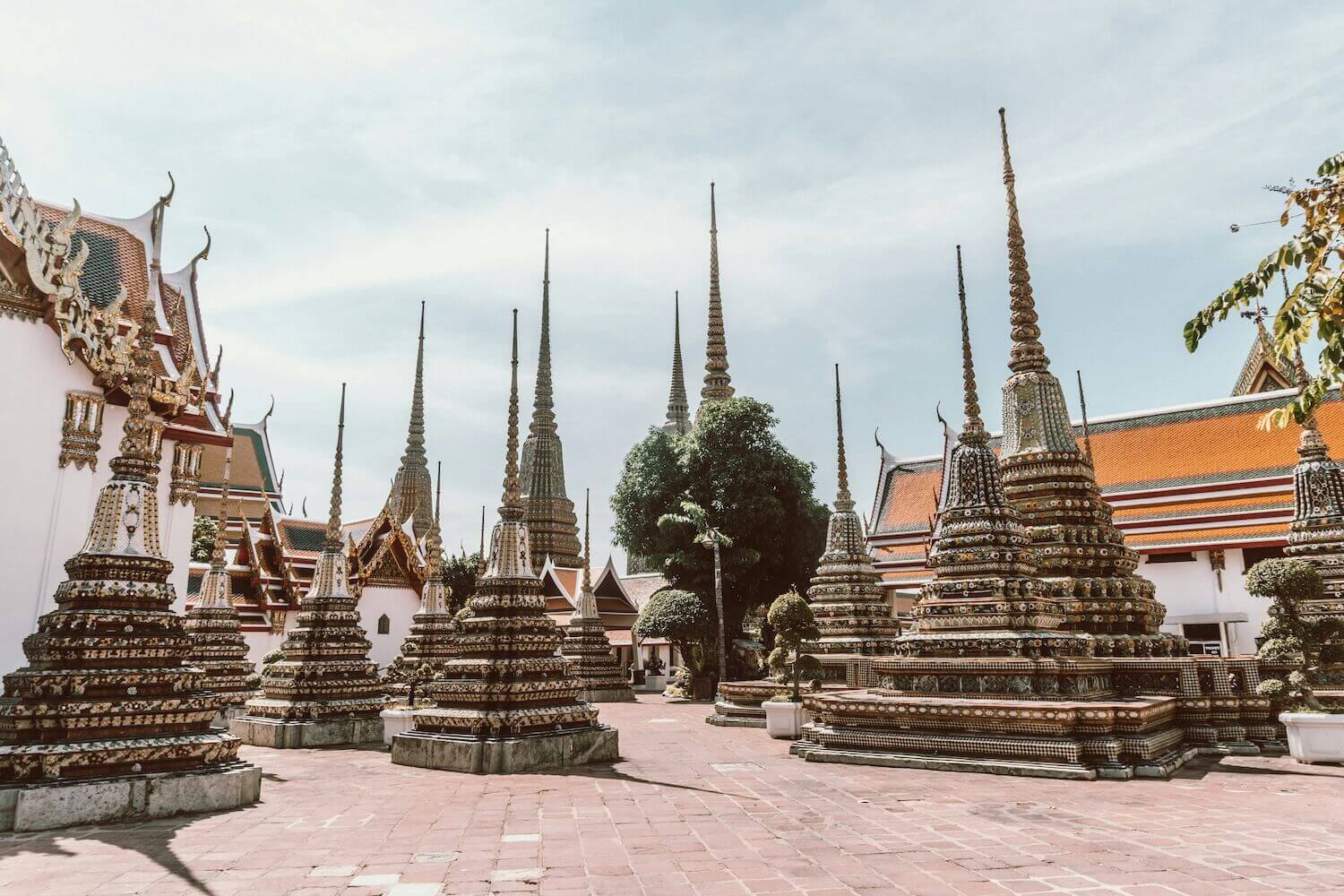
2. Wat Pho

Wat Pho in Bangkok

Next door, and worth the extra ticket. The reclining Buddha inside runs 46 metres long, 15 metres tall, covered in gold leaf from head to foot. Entry costs 300 baht as of 2026, raised from previous years to help fund ongoing restoration work. Open daily from 8 am.

3. Wat Arun

Wat Arun in Bangkok

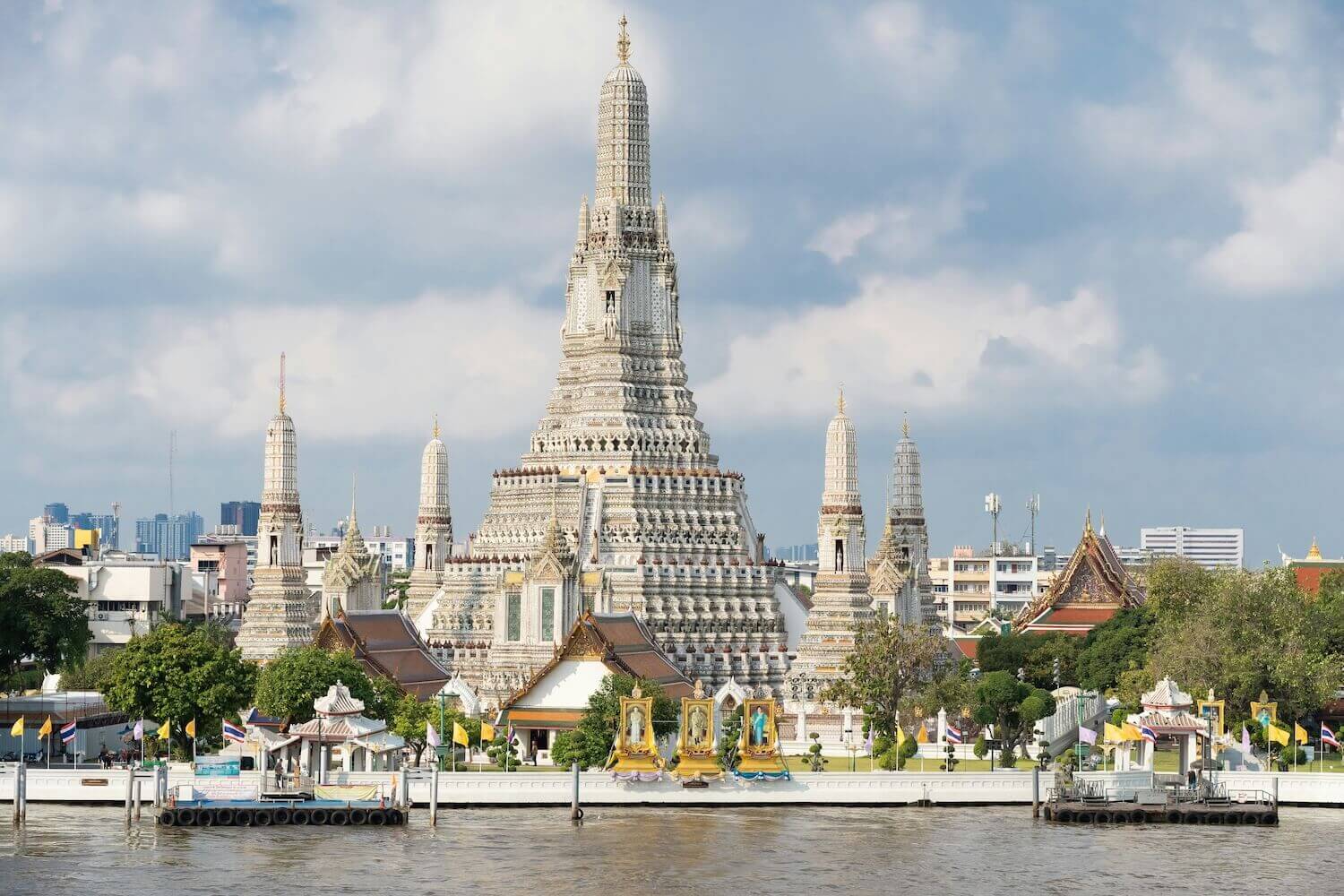
Cross the river to reach this one. The Temple of Dawn’s central prang is covered edge to edge in broken Chinese porcelain, and it photographs best from the far bank at Tha Tien around sunset. Entry is 200 baht. A cross river ferry gets you there in under three minutes.

4. Wat Traimit, the Golden Buddha

Wat Traimit in Bangkok

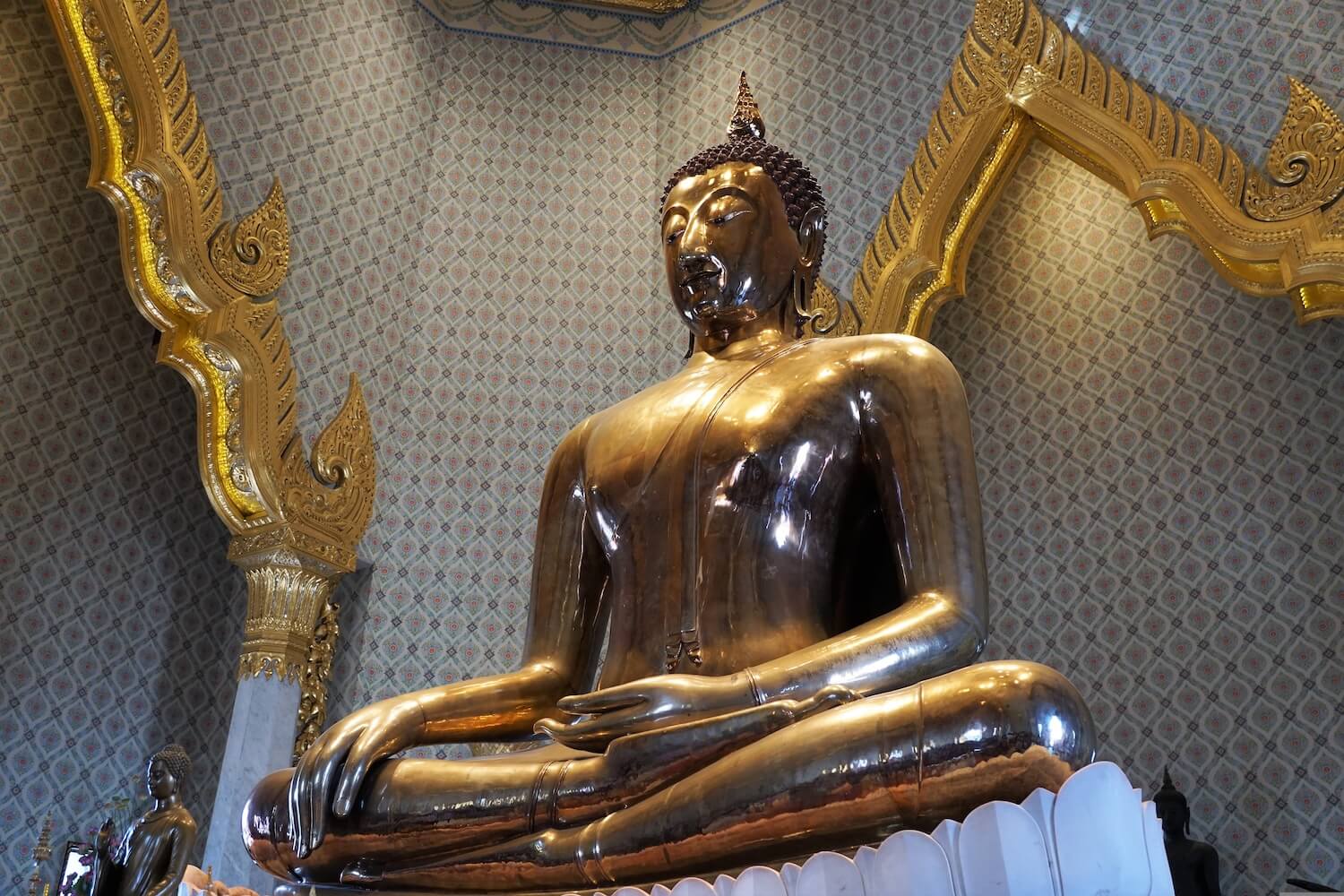
Hidden in plain sight for centuries. The seated Buddha here is 5.5 tonnes of solid gold, discovered by accident in 1955 when a plaster casing cracked during a move and gold showed through underneath. Forty baht gets you into the hall, another hundred into the museum below it. Located right at the edge of Chinatown.

5. Wat Saket, the Golden Mount

Wat Saket in Bangkok

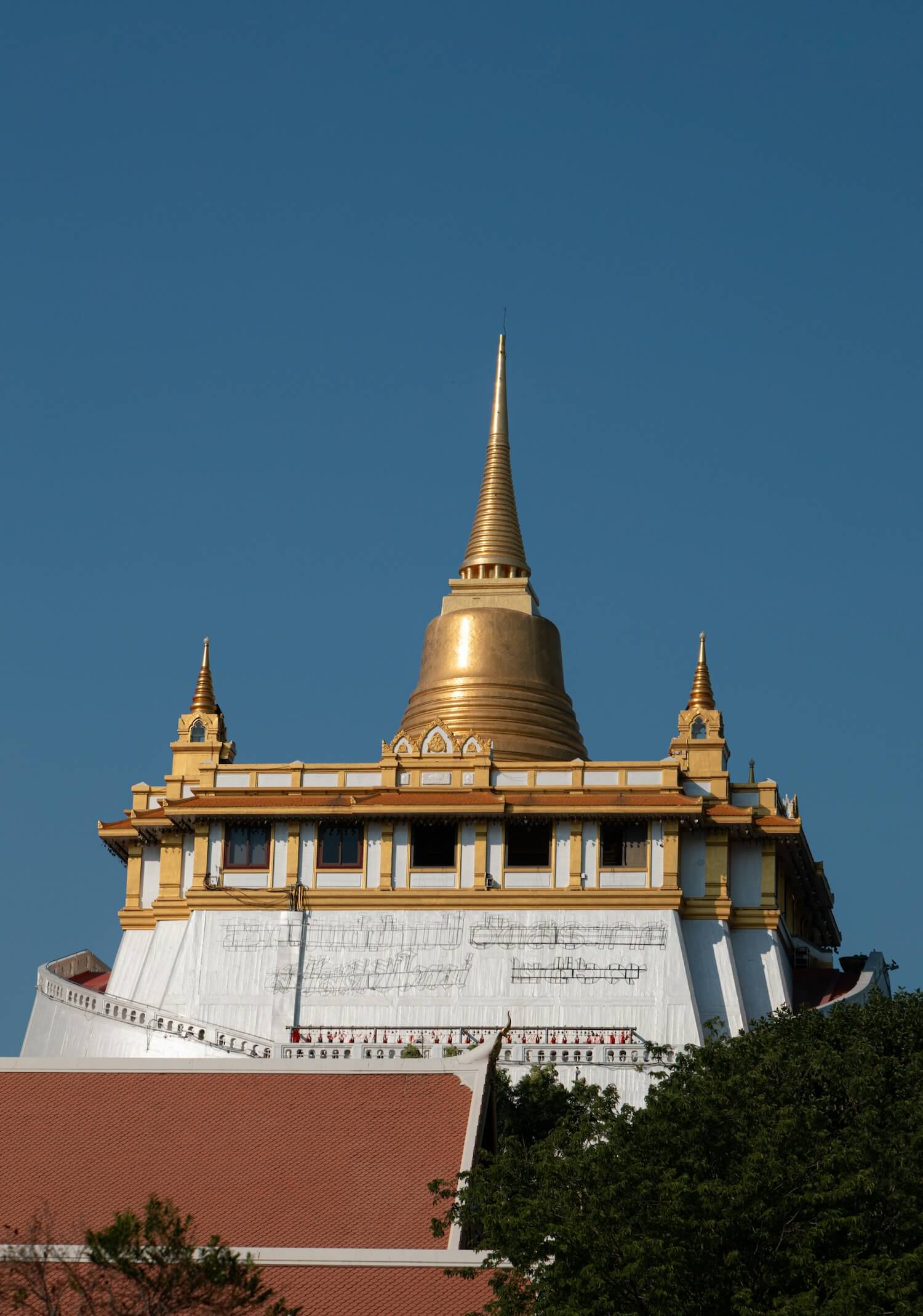
Climb for the view, not just the temple. More than 300 steps lead up an artificial hill to a golden chedi roughly 80 metres above street level, and the top gives one of the few genuine panoramas over old Bangkok. Entrance runs around 100 baht. Go late afternoon for the light, or evening for sunset.

6. Wat Benchamabophit, the Marble Temple

Wat Benchamabophit in Bangkok

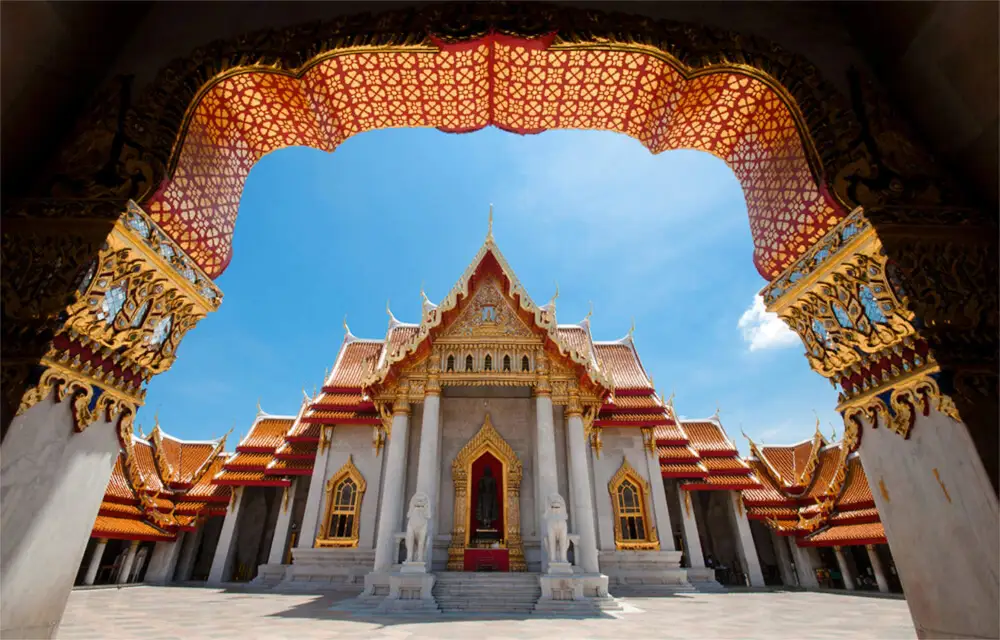
Everything here is Italian Carrara marble, imported specifically for the job in 1899 under King Rama V. It’s the temple visitors compare to European architecture rather than Thai, and it earns the comparison. Expect a small entrance fee, worth confirming at the gate since reported prices vary. Quieter than most temples on this list, which is part of the appeal.

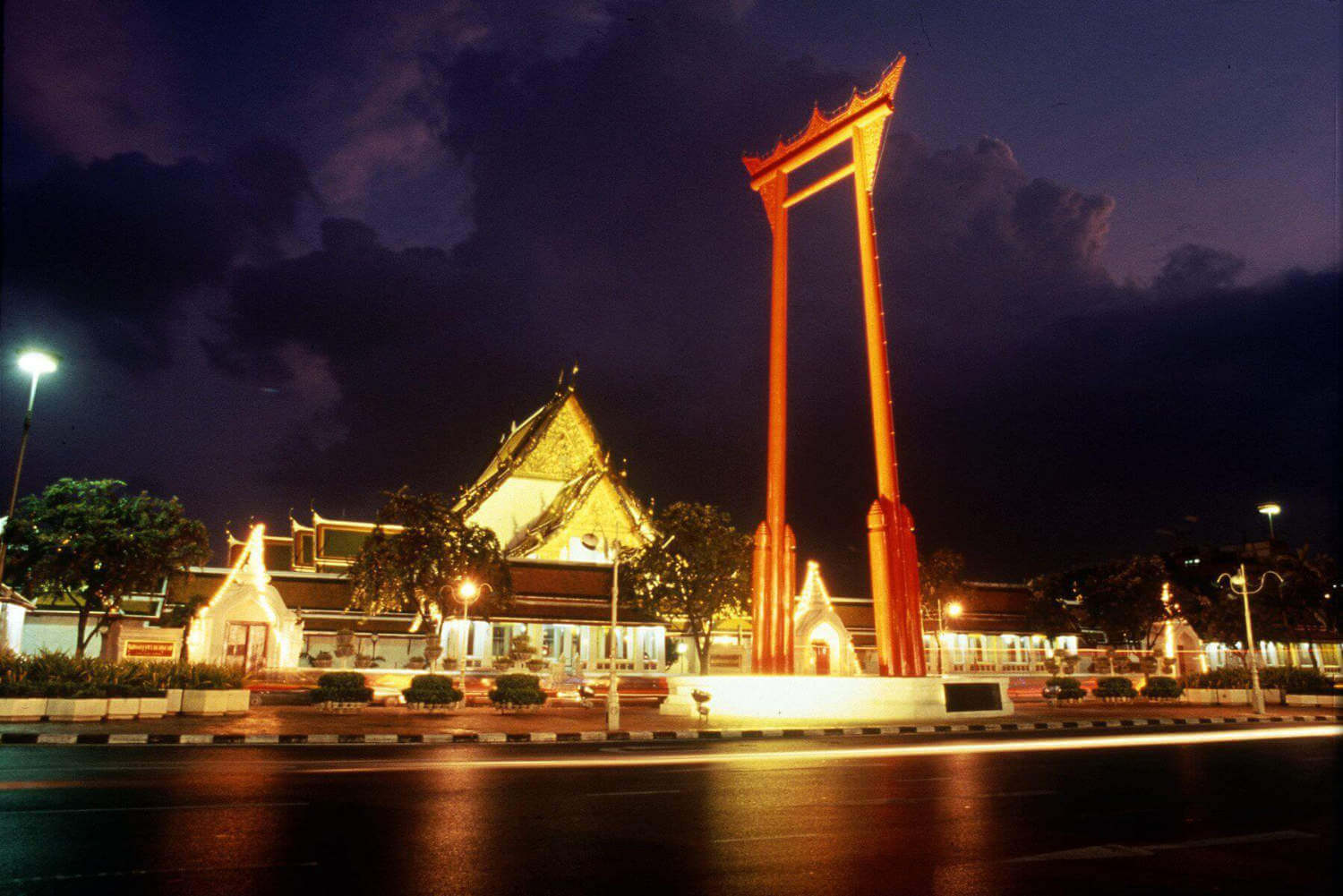
7. Wat Suthat and the Giant Swing

Wat Suthat and the Giant Swing in Bangkok

The red swing standing outside is free to see and impossible to miss, over 21 metres tall, once used in a ceremony where young men tried to grab a bag of coins mid air. Inside, a Sukhothai era Buddha statue that King Rama I had brought specifically for this temple. A small entrance fee applies to the grounds themselves.

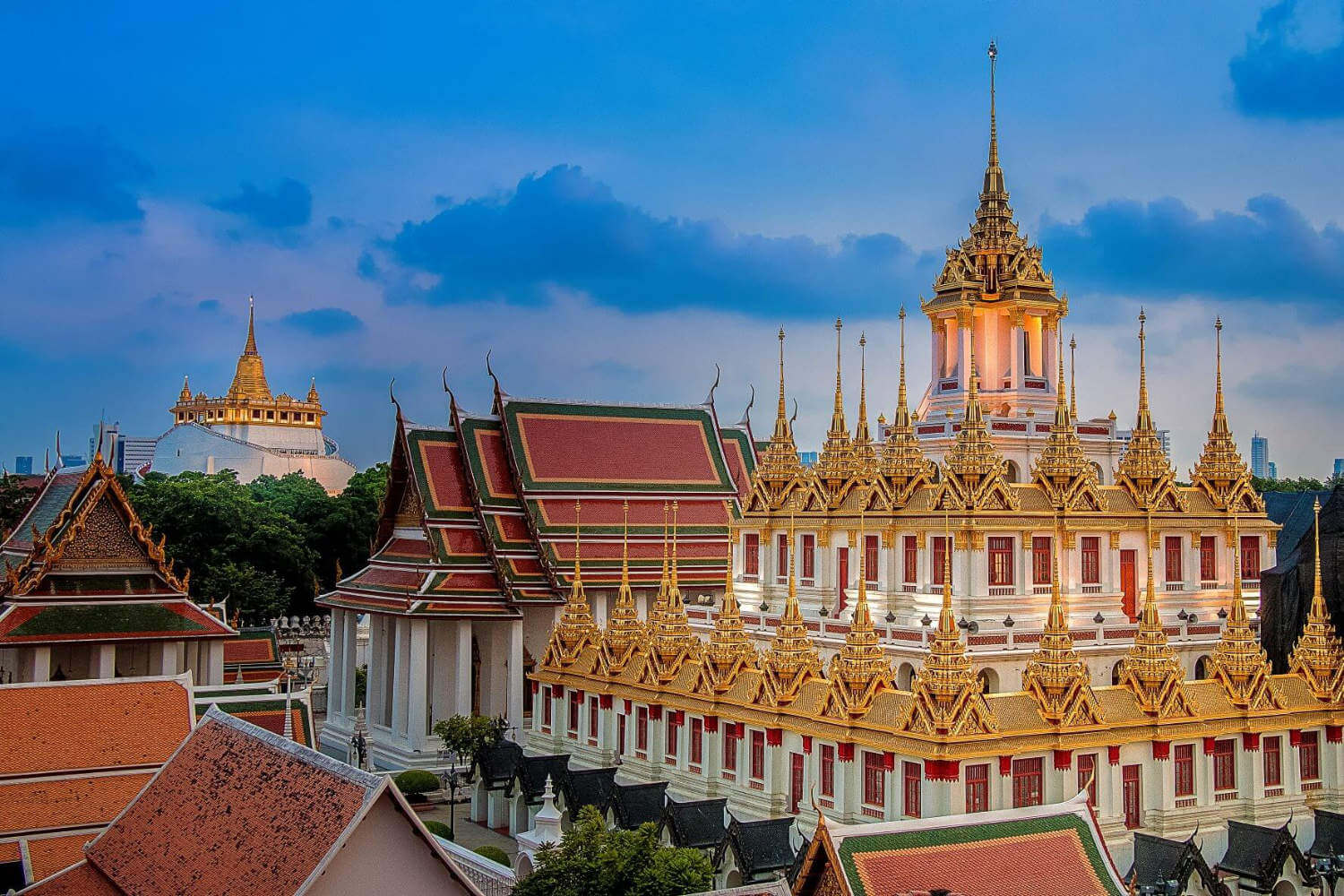
8. Wat Ratchanatdaram, the Loha Prasat

Wat Ratchanatdaram in Bangkok

Thirty seven gilded spires arranged in three tiers, roughly 38 metres tall, built as a meditation space rather than a monument. It’s the metal answer to the golden chedis elsewhere on this list, inspired by similar structures in India and Sri Lanka. Right next to Wat Saket, so pair the two.

9. Wat Mahathat and the Amulet Market

Wat Mahathat and the Amulet Market in Bangkok

No entrance fee here, and English language meditation classes run daily if you want to sit rather than sightsee. Across the road, Bangkok’s biggest amulet market spreads along Maharat Road, stalls of charms, talismans and old coins that locals actually buy, not tourist souvenirs.

10. Wat Kalayanamit

Wat Kalayanamit in Bangkok

Fewer tourists make it across the river for this one, which is exactly the draw. A giant seated Buddha dominates the main hall, and a large bell outside gets rung three times by visitors making a wish. About fifteen minutes on foot from Wat Arun, on the Thonburi side.

Quick Reference

Temple Entrance Fee Known For
Wat Phra Kaew / Grand Palace 500 THB Emerald Buddha
Wat Pho 300 THB Reclining Buddha
Wat Arun 200 THB Riverside prang
Wat Traimit 40 to 140 THB Solid gold Buddha
Wat Saket around 100 THB Golden Mount view
Wat Benchamabophit small fee, varies Italian marble
Wat Suthat small fee Giant Swing
Wat Ratchanatdaram small fee Loha Prasat spires
Wat Mahathat free Meditation, amulet market
Wat Kalayanamit free Giant seated Buddha


Ten temples, four free or nearly free, none of them requiring a full day. Pick three or four and you’ll still see more than most visitors manage in a week. Sukhumvit puts you close to plenty of temples to visit in Bangkok, PIPA Hotel Bangkok among the closest bases. Book your stay at PIPA Hotel Bangkok.

FAQs

1. What to wear to a temple in Bangkok?

Local vendors outside most temples sell inexpensive elephant pants and t-shirts if you turn up unprepared. Note that at the Grand Palace, simply draping a scarf over a sleeveless top is strictly rejected, your shirt must have actual sleeves.

2. What are the must see temples in Bangkok for a first visit?

Wat Phra Kaew, Wat Pho and Wat Arun cover the classics in a single morning. Add Wat Traimit if you’re already in Chinatown, it takes twenty minutes and the Golden Buddha is worth the detour.

3. Are Bangkok’s temples free to enter?

Some are. Wat Mahathat and Wat Kalayanamit charge nothing. The bigger, more famous ones, Grand Palace, Wat Pho, Wat Arun, all charge between 200 and 500 baht.

4. How many temples should I visit in Bangkok?

Three or four in a day is realistic without temple fatigue setting in. Ten across three days works if you space them across mornings and skip the afternoon heat.

5. Is it worth hiring a guide for Bangkok’s temples?

For the Grand Palace and Wat Pho, yes, a guide catches details easy to miss alone, like the mother of pearl inlay on the reclining Buddha’s feet. For smaller temples like Wat Kalayanamit, wandering alone works just as well.

3-Day Bangkok Itinerary: Best Things to Do

3-Day Bangkok Itinerary: Best Things to Do

Most people land in Bangkok within three days and a long list. Here’s how to actually use them. Grand Palace in the morning. Floating market the next day. Evenings are mostly free. No padding, no filler days, just a working Bangkok itinerary of 3 days covering what to do in Bangkok for 3 days.

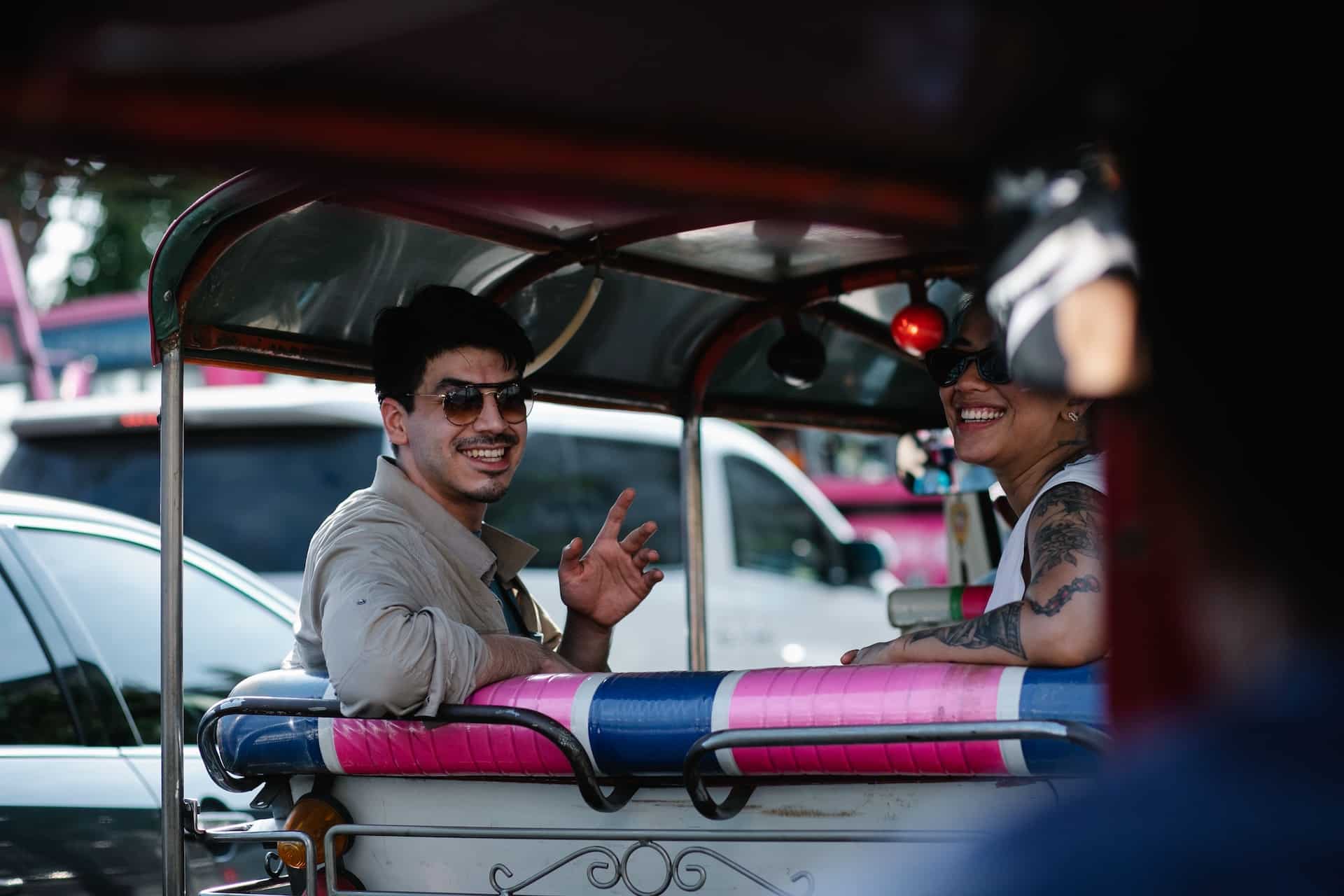
A smiling man and woman ride together in the back of a tuk-tuk while exploring Bangkok.

Day 1, the Old City and the River

Set an alarm. This day doesn’t work if you sleep in, the Old City gets hot and crowded fast once the sun’s properly up. If you’ve got 3 days in Bangkok, this is the one you can’t wing.

  • The Grand Palace and Wat Pho

Start at the Grand Palace, walls King Rama I put up in 1782. Emerald Buddha’s inside at Wat Phra Kaew. Entry’s 500 baht, which also includes the Queen Sirikit Museum of Textiles on the palace grounds, most people miss it. Five minutes further on foot is Wat Pho (300 baht entry), famous for its 46-metre reclining Buddha under gold leaf.

  • Riverside Lunch and Wat Arun

Lunch somewhere with a river view, then the ferry across to Wat Arun. The central prang is covered edge to edge in broken Chinese porcelain. Go late in the afternoon. That’s when the light actually does something to it.

  • Evening at Baia

Head back to Sukhumvit for dinner. Baia, PIPA Hotel Bangkok’s Italian spot, opens at 5 pm, burrata, squid ink pasta, steaks built for sharing, in a room that gets louder and lower lit as the night goes on.

Travel Tips: 

  • Grand Palace tickets can be bought at the gate or booked online in advance via the official website (royalgrandpalace.th).
  • Slip-on shoes. You’ll regret boots by hour two.
  • Cash, not cards, at most temple counters.

Day 2, the Floating Market and the Hotel Spa

No temples today. Canals in the morning, the spa in the afternoon, dinner five minutes from your room. The Bangkok itinerary for 3 days finally slows down here.

  • Damnoen Saduak Floating Market

Damnoen Saduak Floating Market is about 90 minutes outside Bangkok in Ratchaburi. A long-tail boat tour here offers a fast, thrilling ride through narrow canals, passing traditional stilt houses and vendors selling food, fruit, vegetables, and handmade crafts. Hungry? Lunch can come straight from one of the market boats.

  • Serenity Massage

Back at the hotel, book Serenity Massage. Fourth floor. Weekends fill up fast, book ahead.

  • Pacifico and the Pool Bar

Pacifico for dinner. The hotel’s poolside restaurant, Thai by day, Polynesian once it’s dark. The Pool Bar sits right next to it, for anyone not ready to call it a night. One of the more relaxed places to visit in Bangkok in 3 days. No taxi required.

Travel Tips: 

  • To book a long-tail boat tour, arrange it directly at Damnoen Saduak Floating Market when you arrive. For the safest and most convenient option, book in advance through an online travel app.
  • Bring a swimsuit.
  • Book Serenity Massage a day ahead. Weekends go fast.

Day 3, Shopping and the Riverfront

You’ll be tired by now. That’s fine, today’s easier. Mostly shopping, mostly close to the hotel. Some of the best places to visit in Bangkok in 3 days, without much travel time.

  • Siam Paragon, Siam Square and CentralWorld

Siam Paragon, Siam Square, CentralWorld, all within walking distance of each other. Paragon’s luxury and department stores. Square’s better if you want independent boutiques or streetwear. CentralWorld’s just enormous. One of the biggest malls in the city. Easy to lose two hours in without meaning to.

  • Asiatique The Riverfront

Asiatique in the late afternoon (it opens at 4 pm). Open air, riverside, a proper Ferris wheel, and enough restaurants that you won’t have to think hard about where to eat.

  • Final Night

Last dinner back at the hotel. Baia if you want one later one, Pacifico by the pool if you’d rather wind down before an early flight.

Travel Tips: 

  • Terminal 21 is closer to the hotel than any of today’s other stops. Skip the BTS ride entirely.
  • Go before 6 pm. Asiatique gets packed after that.
  • Bring cash. Not every stall at the market takes cards.

Getting Around Bangkok in 3 Days

Transport Best For Approx. Cost Tip
BTS Skytrain / MRT Malls, business districts, avoiding traffic 17 to 65 THB per trip Buy a Rabbit Card to skip ticket queues
Chao Phraya Express Boat Old City temples, riverside hotels 15 to 34 THB per trip Fastest way to cross the river between Wat Arun and the Grand Palace / Wat Pho side (Note: Grand Palace and Wat Pho are adjacent on the same side of the river, so you just walk between them)
Grab (ride-hailing) Door-to-door, late nights 60 to 200 THB per trip More reliable than hailing a taxi on the street
Tuk-tuk Short, novelty rides Negotiate before boarding Agree the price upfront, since it is rarely the cheapest option

Making the Most of Three Days

Three days covers the essentials, not all of Bangkok. Nobody does all of Bangkok in three days. Swap a stop if something else catches your eye along the way.

Sukhumvit Soi 11 puts you close to BTS Nana, Terminal 21, CentralWorld, and PIPA runs a free shuttle for the rest. Book your stay at PIPA Hotel Bangkok.

FAQs

1. Is 3 days enough for Bangkok?

Easily. Grand Palace, the floating market, a shopping day, no rushing required. Tack on a day if Ayutthaya’s calling too.

2. What to do in Bangkok for 3 days on a first visit?

Grand Palace, Wat Pho and Wat Arun on Day

  1. A floating market and the spa on Day
  2. Shopping on Day
  3. Siam Paragon, Siam Square, CentralWorld, Asiatique.

Nothing rushed about it, that’s what to do in Bangkok for 3 days without cramming.

3. What is the best area to stay in for a 3-day Bangkok trip?

For 3 days in Bangkok, Sukhumvit Soi 11 is a solid base, PIPA Hotel Bangkok sits right there, close to BTS Nana, Terminal 21, CentralWorld, with a shuttle for the last stretch. The Old City temples are further out. Budget 30 to 45 minutes by taxi and build that into Day 1. For more tips on choosing the perfect location, see our guide to the best area to stay in Bangkok for the first-time.

4. How much does a 3-day trip to Bangkok cost?

1,500 to 2,500 baht a day, food, transport, entry fees, hotel not included. More comfort costs more. 3,500 to 5,000 baht buys a nicer place and a few tours on top.

5. What should I pack for temple visits in Bangkok?

Shoulders and knees covered, shoes you can kick off fast, a scarf for the stricter temples. Sunscreen. The heat gets people who aren’t ready for it.

Explore Chinatown, Bangkok: Food, Markets & More

Explore Chinatown Bangkok: Food, Markets & More

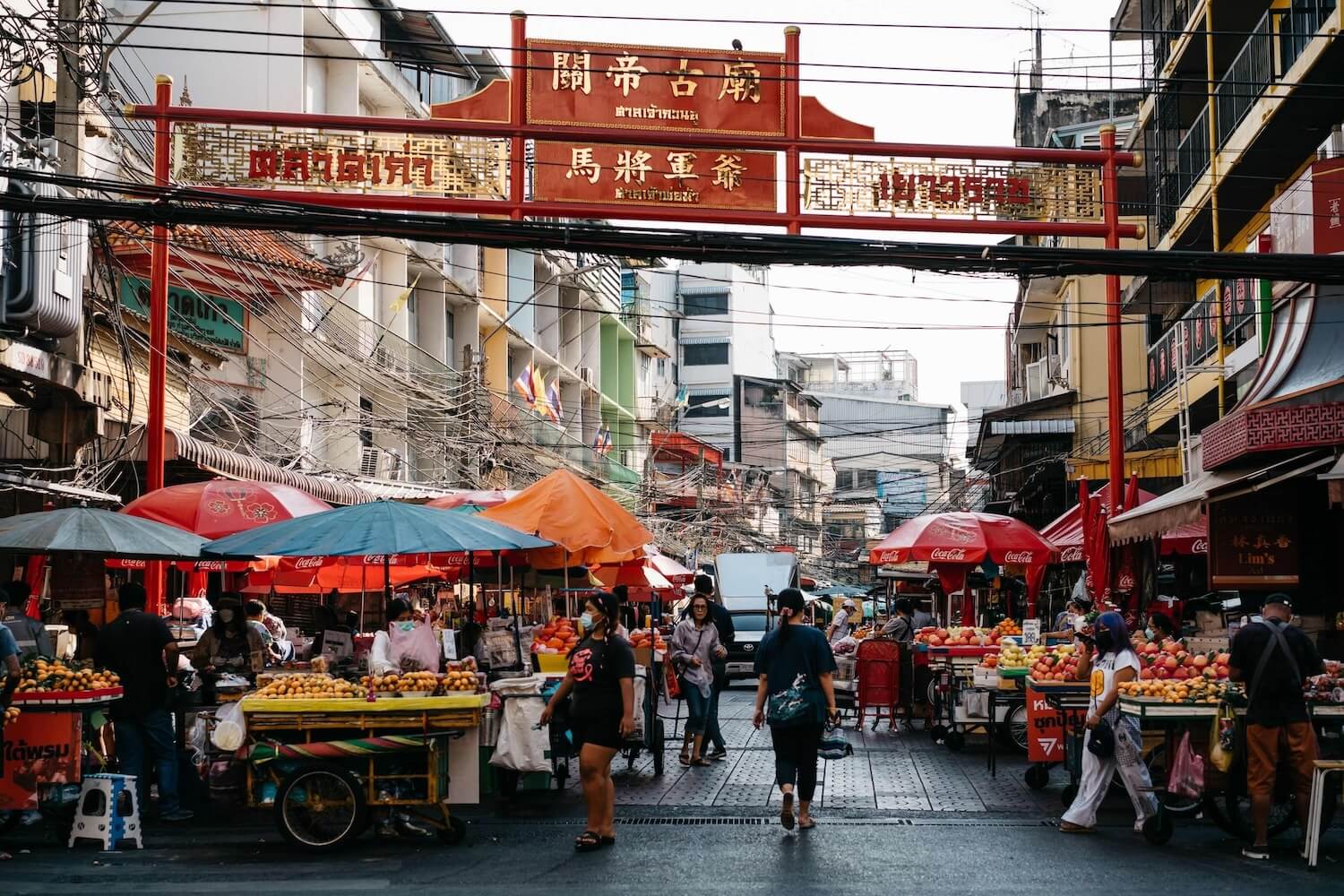
Bustling street market with fruit vendors beneath a red Chinese archway in Chinatown, Bangkok.

Step into Chinatown in Bangkok and the city shifts into a different rhythm, one of clattering woks, temple bells and neon signs stacked three deep above the pavement. Centred on historic Yaowarat Road in the Samphanthawong district, this is one of the oldest Chinese quarters in Southeast Asia, dating back to the late 18th century and it remains the beating heart of the city’s Thai-Chinese community.

Whether you arrive at sunrise, when shutters are just rattling open, or after dark, when the food stalls hit full swing, Chinatown in Bangkok rewards travellers who are happy to wander, get a little lost and eat along the way. Here’s what to do in Chinatown, Bangkok, where to eat and how to fit it all into your stay at PIPA Hotel.

Key Takeaways

  • Location: Samphanthawong District, between the Chao Phraya River and the city’s modern shopping hubs.
  • Best known for: Yaowarat Road, often nicknamed the “belly of the dragon” for its endless food stalls.
  • Signature sight: the Golden Buddha at Wat Traimit, one of the largest solid-gold statues in the world.
  • From PIPA Hotel: an easy MRT, taxi, or Grab ride from Sukhumvit, making it a natural half-day or evening add-on to your stay.

How to Get to Chinatown, Bangkok

  • By MRT: Take the Blue Line to Wat Mangkon Station, which puts you right on Yaowarat Road. Hua Lamphong and Sam Yot stations are also close by.
  • By BTS + boat: Ride the Silom Line to Saphan Taksin, walk to the pier and take the Chao Phraya Express Boat to Ratchawong or the Marine Department pier for a scenic, traffic-free arrival.
  • By taxi, tuk-tuk, or Grab: Easy to find around the city, just ask for “Yaowarat”. Traffic on and around Yaowarat itself gets heavy in the evening, so factor in extra time.
  • By bus: several public bus routes run through the area, a low-cost option if you’re not in a hurry.
  • From the airport: Suvarnabhumi Airport is roughly 32km away. The Airport Rail Link to Ratchaprarop connects to a bus, taxi, or Grab from there. Don Mueang is around 28km away and involves a bus transfer, so a taxi or Grab is the more convenient route.

Staying at PIPA Hotel on Sukhumvit Soi 11 puts you within easy reach of Chinatown by MRT, taxi, or Grab, so you can spend the day among Yaowarat’s markets and temples and still be back in time for dinner or an evening out exploring Sukhumvit nightlife.

What to Do in Chinatown, Bangkok

From historic temples and bustling markets to hidden alleyways, heritage buildings and riverside views, Bangkok’s Chinatown is packed with experiences that showcase its rich culture and character.

Wat Traimit

Home to the Golden Buddha, a solid-gold statue weighing around 5.5 tonnes and considered one of the largest in the world. It’s a working temple, so dress modestly and follow the posted guidance on respectful behaviour inside.

Talad Noi

A maze-like old community of metal workshops, small family shrines and backstreets covered in murals painted by visiting street artists. The alleys are easy to get lost in, so a guided walking tour is a good way to see the highlights, including one of the neighbourhood’s favourite Instagram spots, an old VW Beetle parked among the shophouses.

Sampheng Market

One of Bangkok’s oldest wholesale bazaars. The Sampheng Market is a narrow, covered lane packed with stalls selling everything from fabric and stationery to kitchenware and dried spices, often at some of the lowest prices in the city.

Nana Soi

Not to be confused with Nana Plaza on Sukhumvit, this small road near Yaowarat has a distinct hipster streak, with old shophouses converted into guesthouses, cocktail bars and cafes.

A Sundowner by the River

Several rooftop bars along the Chao Phraya offer river views without the dress codes or price tags of the city’s fancier rooftops, a relaxed way to watch the sun go down over the water.

Sol Heng Tai Mansion

A century-old Chinese merchant’s house, now home to a small cafe and a courtyard pool, is also the only dive centre in Bangkok. Sol Heng Tai is one of Chinatown’s more unexpected finds.

Chinatown Bangkok Street Food

Yaowarat’s reputation is built on the street. Expect sizzling woks of seafood, steaming baskets of dim sum, whole ducks hanging in shop windows, mango sticky rice, egg custard tarts and rolled rice noodles (guay chub) sold from carts on almost every corner. Look out for stuffed toasted bread stalls too, serving warm buns filled with Thai milk tea or chocolate.

If you’d rather have a local guide navigate the maze of stalls and pick the best bites for you, a Chinatown food tour is a good way to sample a wide cross-section in one evening without the guesswork.

Where to Eat in Chinatown, Bangkok

  • Hua Seng Hong: A long-running, always-busy dim sum restaurant with menus in Chinese and English.
  • T&K Seafood: A Yaowarat corner institution for grilled prawns, mussels with holy basil and fresh catches, with sidewalk or upstairs seating.
  • Ba Hao: A restored shophouse restaurant known for its Tan Tan noodles, duck wontons and an inventive cocktail menu.
  • Small dumpling counters: Recommended in Michelin’s inexpensive-eats guide, best known for takeaway prawn dumplings.
  • Other well-regarded names around the neighbourhood: Nai Ek Roll Noodles, Lek & Rut Seafood and Tia Sua Restaurant.

China Town, Bangkok Market: Sampheng and Beyond

Beyond the food stalls, the China Town, Bangkok market scene runs from the gold shops lining Yaowarat Road to the covered lanes of Sampheng Market. Expect to find a lot of traditional Chinese medicine pharmacies stocked with dried herbs, gold and jewellery stores, silk and textiles and stalls selling stationery, souvenirs and local snacks.

Night Market, Chinatown, Bangkok

Most shops open around 9 am, but the neighbourhood is really built for the evening. Restaurants and street stalls stay busy until close to midnight and once the sun goes down, neon signage lights up Yaowarat Road in a wash of red and gold.

This is when the night market, Chinatown, Bangkok, truly comes alive, food carts multiply, queues form outside the seafood spots and rooftop bars and river-view terraces fill up with locals and travellers alike.

Best Time to Visit Chinatown, Bangkok

Evening, from around 6 pm onwards, is the best time to visit Chinatown, Bangkok. Around this time is when the street food stalls, lit-up signage and market crowds are at their liveliest. If you’d rather explore without the crowds and heat, an early morning wander has its charm: shutters just opening, breakfast stalls setting up and streets quiet enough to actually take in the architecture.

One practical note: many street food vendors take Mondays off, so aim for Tuesday through Sunday if a specific stall is on your list.

Where to Stay Near Chinatown, Bangkok

Chinatown has its pocket of characterful guesthouses tucked into century-old shophouses, with steep staircases, a handful of rooms and shared bathrooms rather than full hotel amenities. It’s a charming one-night stay, but if you’d rather have the comfort of a proper hotel base while still being close to the action, staying on Sukhumvit is the easier call.

PIPA Hotel Bangkok, located on Sukhumvit Soi 11, is just a short MRT, taxi, or Grab ride from Chinatown’s temples and markets, while also keeping you within walking distance of Sukhumvit nightlife, the best bars in Sukhumvit Soi 11 and the top shopping malls in Bangkok for the rest of your stay.

Spend the day exploring Yaowarat, then head back to a comfortable room and PIPA’s complimentary shuttle service to Nana BTS and Terminal 21 to carry on exploring after dark.

Have more questions? Visit our FAQs page to find quick answers before or during your stay.

FAQs

1. What are the best things to do in Chinatown Bangkok at night?

After dark, Yaowarat Road fills with street food vendors, glowing neon signage and a lively crowd browsing the stalls. It’s also a good time for a rooftop sundowner along the Chao Phraya or a wander through the lit-up lanes near Talad Noi.

2. Why is Chinatown Bangkok famous?

Chinatown, centred on Yaowarat Road, is known for its street food, Thai-Chinese culinary fusion, bustling markets and historic temples like Wat Traimit, all packed into a neighbourhood that dates back to the late 1700s.

3. What can I buy in Chinatown, Bangkok?

Sampheng Market and the surrounding streets are known for their gold jewellery, traditional Chinese herbs and spices, silk and textiles and a wide range of souvenirs and local snacks.

4. What food should I try in Chinatown, Bangkok?

Don’t miss dim sum, fresh seafood, rolled rice noodles (guay chub), mango sticky rice and egg custard tarts. On the street food side, look for fried rice, tom yum soup and stir-fried noodles from the Yaowarat stalls.

5. What are the best restaurants in Chinatown, Bangkok?

Popular picks include Hua Seng Hong, T&K Seafood, Nai Ek Roll Noodles, Lek & Rut Seafood and Tia Sua Restaurant.

6. Are the markets in Chinatown open every day?

Yes, most shops and markets open daily, generally from around 9 am. Keep in mind that many street food vendors take Mondays off, so Tuesday through Sunday is the better window for the full food-stall experience.

7. How do I get to Chinatown from the PIPA Hotel?

From PIPA Hotel on Sukhumvit Soi 11, Chinatown is a short taxi or Grab ride away, or you can take the MRT for a fixed-price, traffic-free option into the heart of Yaowarat.

Family Travel in Bangkok: Where to Stay and What to Do

Family Travel in Bangkok: Where to Stay and What to Do

Wat Arun Temple of Dawn illuminated at sunset along the Chao Phraya River, one of the most iconic places to visit in Bangkok with family

Bangkok has a way of winning over every type of traveller and families are no exception. It has air-conditioned malls for when it gets hot, temples that feel like a peaceful sanctuary, street food that even picky eaters tend to love and a transport system that makes getting around far easier. A Thailand family trip with Bangkok as your first stop is one of those holidays the whole group will talk about for years after.

That said, Bangkok is a big city. Knowing where to stay and what to do makes the difference between a smooth trip and an exhausting one. Here is everything you need to plan for exploring Bangkok with your family.

Where Are The Best Areas to Stay in Bangkok with Family?

Location is one of the most important things to consider on a family trip, including how much time you spend in transit, how easy it is to get back for nap time and whether you have good food within walking distance. The best area to stay in Bangkok with family depends on your priorities, but a few neighbourhoods stand out.

  • Sukhumvit is one of those places that can be considered an all-rounder. It has the BTS Skytrain running the full length of it, Terminal 21 and EmQuartier shopping centres close by and a wide range of restaurants covering everything from Thai street food to Western comfort food. It is also one of the safer and better-lit parts of the city at night, which matters when you are managing children and your luggage.
  • The Siam area is a strong alternative if your family’s idea of a good day involves shopping malls and indoor attractions. Siam Paragon has the Sea Life Bangkok Ocean World and KidZania, which makes it very easy to plan your entire day without ever stepping outside into the heat.
  • The Riverside is quieter and more scenic, with stunning views of the Chao Phraya River and easier access to temples like Wat Arun and Wat Pho. It suits families with older children who can handle more walking and less air-conditioning. If you are asking what the best area to stay in Bangkok with family is for first-timers, Sukhumvit is usually what comes to mind first.

Where to Stay in Bangkok with Family?

When it comes to where to stay in Bangkok with family, the key things to look for are space, a swimming pool and proximity to transport. A connecting room or a two-bedroom setup saves you the nightly negotiation over who sleeps where.

On the Riverside, Capella Bangkok and Mandarin Oriental are well-suited for families who want space and service. In Siam, the Bangkok Marriott Hotel Sukhumvit and Novotel Bangkok on Siam Square sit close to all the indoor attractions.

For Sukhumvit, PIPA Hotel Bangkok on Soi 11 is one of the best options. It is a family hotel in Bangkok with room types designed specifically for groups travelling together:

  • The Family Connecting Roomcomes with two linked rooms, separate beds and two bathrooms, the kind of setup that actually gives everyone room to breathe after a long journey.

Spacious two linked rooms in Family Connecting Room at PIPA Hotel Bangkok

Spacious Premier Family Room at PIPA Hotel Bangkok with a king bed and a single

  • The Two Bedroom Suite has a king bedroom, a twin bedroom and a full living area for larger groups

Spacious living area in Two Bedroom Suite at PIPA Hotel Bangkok

Spacious king bedroom in Two Bedroom Suite at PIPA Hotel Bangkok

PIPA also has a panoramic-view pool, a 24-hour fitness centre and a complimentary shuttle to BTS Nana and Terminal 21. It sits in the heart of Sukhumvit Soi 11, which means food, pharmacies and transport are all within a short walk.

Places to Visit in Bangkok with Your Family

Bangkok has no shortage of things to do. From world-class aquariums to open-air safari parks, the city does a great job of mixing education, entertainment and family fun.

  • Sea Life Bangkok Ocean World: It is located in the basement of Siam Paragon and is one of the largest aquariums in Southeast Asia. There is a 270-degree glass tunnel where sharks and rays swim overhead, a penguin enclosure, interactive rock pools and a glass-bottom boat ride over the shark tank. It is fully air-conditioned, stroller-friendly and ideal for a hot afternoon. Tickets run approximately THB 350 to THB 590 per person, depending on the package.
  • Safari World: It is further out (about 40km from central Bangkok) but absolutely worth a full day. It covers over 660 acres and splits into two zones: Safari Park, where you can drive through and spot lions, tigers, zebras and giraffes roaming in open habitats and Marine Park, which has dolphin shows, sea lion performances and a jungle cruise.
  • KidZania Bangkok: This is another indoor favourite, also inside Siam Paragon. Children aged 4 to 14 can role-play as doctors, pilots, firefighters and chefs in a scaled-down city built for them. It is one of those places to visit in Bangkok with family that keeps older kids genuinely engaged rather than just stimulated.
  • Asiatique The Riverfront: It is a riverside night market with a giant Ferris wheel, puppet shows, toy shops and dozens of restaurants. The place is open-air but breezy along the water and the atmosphere is relaxed enough for younger children.

For something cultural, the Grand Palace and Wat Pho are great options, especially if you go early in the morning before the heat peaks.

Practical Things to Know Before You Visit Bangkok

  • Best Time to Visit

November to February is the most comfortable window for visiting Bangkok with family. Temperatures usually range between 25°C and 32°C, humidity is lower and there is very little rain. March to May is hot and dry but manageable if you plan around air-conditioned venues in the afternoons. June to October is monsoon season, still very doable, but you can expect afternoon downpours.

  • Getting Around

The BTS Skytrain is the easiest option for Sukhumvit-based families. Grab is reliable, air-conditioned and very affordable for longer journeys. Tuk-tuks are fun for short trips but agree on the fare first with your driver.

  • Food

Bangkok is excellent for families on the food front. Mall food courts have different options and are usually well-priced. Most sit-down restaurants have highchairs and children’s menus. If your children are adventurous, introduce them to khao man gai (poached chicken rice) and mango sticky rice, as they are some of the must-try foods.

  • Pack Smart

Sunscreen, a hat, mosquito repellent and a small portable fan for younger children make a real difference. Also factor in a change of clothes per child per day, given the heat and the likelihood of sticky mango-related incidents.

Ready to Plan Your Bangkok with Family?

Bangkok is one of those cities that rewards families who do a little planning. Get the neighbourhood right, pick a hotel with the right room type and a pool and the rest just falls into place. From shark tunnels and safari drives to river temples and night markets, the city has it all.

If you are still working out where to stay in Bangkok with family, PIPA Hotel Bangkok on Soi 11 is worth a look for the room options, the panoramic-view pool and a location that puts you close to almost everything on this list.

Frequently Asked Questions

Q1: Do Bangkok attractions offer discounts for children?

Yes, most family-friendly attractions in Bangkok offer tiered pricing for children. Sea Life Bangkok Ocean World and KidZania both have reduced rates for younger children, and those typically under 90 to 100 cm enter free or at a steep discount. Safari World offers family bundle packages that work out cheaper than buying individual tickets. It is always worth checking the official website before you go, as online booking is usually 10 to 20% cheaper than buying at the door.

Q2: Is Bangkok safe for families travelling with young children?

Bangkok is generally considered safe for families. The main things to watch for are heavy traffic when crossing roads, uneven pavements in older parts of the city and the heat, which can be hard on toddlers and young children. Sticking to BTS-connected areas like Sukhumvit minimises most of these concerns. Hospitals and pharmacies are easy to find, and medical care in Bangkok is of a high standard and very affordable compared to most Western countries.

Q3: How many days should I plan for Bangkok on a Thailand family trip?

Most families find three to five days in Bangkok is the sweet spot. Two days covers the key indoor attractions like Sea Life and KidZania, one day for temples and cultural sites and one or two days for shopping and markets. If Safari World is on your list, factor in a dedicated full day for that alone. Any shorter than three days and you will feel rushed; any longer and younger children may start to find the city overwhelming.

Your New Hotel to Stay in Sukhumvit, Bangkok

Your New Hotel to Stay in Sukhumvit, Bangkok

Bangkok has an energy that never settles into something predictable. That quality is part of what draws people back and it shows up more clearly than in how the city builds hotels. Sukhumvit Road, in particular, has seen a wave of new openings over the past year, ranging from high-end lifestyle properties to reliable international brands.

If you are planning a trip and searching for a new hotel in Bangkok that puts you close to everything without any compromise on comfort, Sukhumvit is the place you need to be. The neighbourhood has everything, ranging from transport links, restaurants and nightlife. Additionally, it has newer hotels built with a much clearer sense of what modern travellers actually want from a stay. 

Skyline in Bangkok with hotels and commercial buildings

Photo credit: Chris Thomassen

What to Look for When Choosing a New Hotel in Bangkok

Bangkok has many hotel options and it can be confusing. A few simple things help you narrow down your choices.

BTS or MRT access matters more than almost anything else. If the nearest station is a long walk away, you will spend more time and money on taxis than you expect. On Sukhumvit, the Nana-to-Asok stretch is particularly worth prioritising.

The soi itself sets the mood of your stay. Soi 11 is lively with bars, restaurants and foot traffic well into the night. Soi 22 is calmer and better suited to a business-focused trip. Soi 1 near Bumrungrad is the quietest of the three. You can pick the place based on your needs and trip purpose.

Finally, check the hotel’s direct booking website before looking anywhere else. Many new hotels often offer lower prices on their own websites than what you’ll find on booking platforms.

The Best New Hotels on Sukhumvit Right Now

If you’re looking for a new hotel in Sukhumvit, Bangkok, that feels well thought out, then look beyond generic room photos and check which hotels actually combine style, location and practical comfort. 

PIPA Hotel Bangkok

Formerly Grand President Hotel Bangkok, PIPA has reopened its doors as a 4-star lifestyle property with 171 rooms and suites, rooftop facilities and two distinct dining venues in the heart of Sukhumvit Soi 11. 

Pipa Hotel Exterior


Why it stands out

What makes PIPA so easy to recommend is the way it covers multiple travel styles without feeling generic. It works for solo travellers who want a clean, well-located space, for couples looking for something more design-led and for families or small groups who need more room than what a standard city hotel room usually provides. Some room categories also include private Jacuzzis, which gives the property a more elevated feel.

Rooms at a glance

PIPA’s room mix gives travellers a range of options. Current room and suite categories include: 

Room Type Size (sqm) Description
Deluxe Room 27 sqm Ideal for short stays and simple city breaks.
Grande Deluxe 32 sqm A little more space for longer or more comfortable stays.
Premier Sky 27 sqm High-floor positioning with a stronger city outlook.
Grande Premier 32 sqm A more refined standard option.
Family Connecting Room 64 sqm Two linked rooms and two bathrooms.
Premier Family 42 sqm Useful for small families or longer stays.
Premier Triple 42 sqm Suited to friends or small groups.
Executive Room with Jacuzzi 36 sqm A more indulgent option for couples.
Pipa Jacuzzi Room 36 sqm A private, cocoon-like room with its own Jacuzzi.
Pipa Suite 64 sqm A more spacious suite layout with a separate living space.
Pipa Two Bedroom Suite 96 sqm Best for families, longer stays, or apartment-style space with hotel services.


The hotel also offers high-speed fibre-optic Wi-Fi, smart TVs, premium linens and a well-thought-out design. 

Dining and facilities

The dining set-up at PIPA is split across two venues, each with a different mood. Pacifico covers breakfast through dinner with international and French Polynesian menus in a lighter, more relaxed setting, while Baia leans into a livelier evening atmosphere with Italian food and a restaurant-bar feel that fits Soi 11 well. 

The rest of the property is built around convenience and downtime. There is a rooftop sanctuary with pool access, a fitness room and ongoing food and drink offers. For guests who book direct, the hotel also lists a complimentary shuttle service to BTS Nana and Terminal 21, which adds another layer of convenience for shopping and city transport. 

Baia Restaurant

What Is Around You on Sukhumvit Soi 11

Staying at or near Soi 11 means the neighbourhood covers most of what a Bangkok trip needs, with little travel required.

After dark, Sukhumvit Soi 11 nightlife stretches a few hundred metres with rooftop bars, underground clubs and casual dining all within walking distance of PIPA’s front door. By day, Terminal 21 is two BTS stops away and arranges its floors by international city theme, which makes it easy to navigate and genuinely enjoyable for families with children. EmSphere, the newer mall near Phrom Phong, is two stops in the other direction and has a strong mix of international and Thai brands worth exploring.

The Sukhumvit Night Market near Nana Square is an 800-metre walk from PIPA, open daily and full of grilled food, trinkets and easy people-watching. For a wider night market experience, Pratunam is 3.5 kilometres away and Patpong is 5 kilometres away, both reachable in under 20 minutes by Grab.

Why Sukhumvit Keeps Drawing New Hotels

Spend a few days on Sukhumvit and you’ll realise why it is a traveller favourite. Everything is close by, including the BTS, malls and restaurants, often on the same block.

That is also what has made the lower Sois, roughly Soi 1 through Soi 21, the most competitive hotel strip in Bangkok. BTS Nana and BTS Asok give guests rail access across the entire city, whilst Terminal 21, EmSphere and Bumrungrad International Hospital are all within walking distance of most properties. 

Conclusion

Bangkok’s hotel scene moves fast and Sukhumvit moves with it. For something fresh and stylish, PIPA Hotel Bangkok is a strong choice. With spacious rooms, rooftop downtime and Soi 11 right on your doorstep, it makes a great stay for exploring the city at your own pace. Planning a Bangkok trip soon? This is the kind of place worth having open in another tab while booking.


Best Bars & Party Spots in Sukhumvit Soi 11 for Every Vibe

Best Bars & Party Spots in Sukhumvit Soi 11 for Every Vibe

Bangkok after dark turns into something entirely different in the best way possible. The lights get brighter, the music gets louder and somehow you always end up staying out later than you meant to. If there’s one place that really captures that vibe, it’s Sukhumvit Soi 11.

Just a short walk from Nana BTS Station, this stretch has a bit of everything, ranging from rooftop bars for sunset drinks, cocktail spots tucked behind unmarked doors, buzzing clubs and laid-back pubs.

 The crowd here is so diverse that on any given night, you will find Thai locals, expats and first-time visitors all out at the same time. That blend is part of what gives Sukhumvit bar street its character. Here are some of the best bars and party spots in Sukhumvit Soi 11, accommodating every mood and vibe.

Sukhumvit bar

thailandmagazine.com

Sky-High Views and The Rooftop Scene

If you’re looking to sip and catch mesmerising views, then these two rooftop bars on Soi 11 are worth going out of your way for.

Above Eleven is one of the best bars in Sukhumvit Soi 11, known for its Nikkei cuisine, a Peruvian-Japanese fusion menu, alongside a strong cocktail menu and panoramic Bangkok skyline views. Order their bar bites with your drinks to fully enjoy the experience and stay for the DJ sets that run through the night.

A few doors along, Pastel Rooftop Bar is on the 22nd floor of the Aira Hotel at 14 Sukhumvit Soi 11. Their Mediterranean-style menu pairs well with their drink selection. With an open-air layout and beautiful city views, Pastel is a good choice for both date nights and just chilling with a drink in your hand.

Both of these places are a short walk from Pipa Hotel Bangkok, located on Soi 11, so you can enjoy the skyline without worrying about getting home. And if you feel like staying in instead, Baia, located inside Pipa Hotel Bangkok, is made for easy, all-in-one nights out. Come for Italian coastal plates and good cocktails, then stay as the DJs take over and the lights dim. It’s an effortless way to settle in and enjoy the night.

Havana Social Sukhumvit Soi 11

havanasocialbkk.com

Hidden Bars on Soi 11

The most talked-about Sukhumvit Soi 11 bar experience involves a phone booth. Havana Social at Sukhumvit Soi 11 has no visible sign outside and the entrance is through a vintage telephone box. Once inside, the bar turns into a full 1940s Cuban-style venue with live Latin music, a rum-heavy cocktail list and a lively crowd. It opens daily from 6 pm to 2 am, with salsa classes on Sundays.

Hemingway is another option for those who want a more low-key start to the evening. The garden bar’s teak-house setting and relaxed cocktail menu make it a great first stop before moving on to something louder.

The Clubs That Keep Soi 11 Going Until Dawn

When the bars start winding down but you are nowhere near done, Soi 11 shifts gears and the clubs take over, keeping the music going well past midnight. Levels Club at Sukhumvit Soi 11 features multiple sections, including a main dance floor, an outdoor terrace with city views and a lineup of resident and international DJs. Table service is available and doors open at 9 pm.

Sugar Club Bangkok is the city’s go-to for hip-hop fans with a high-energy vibe. As a dedicated rap and R&B venue, it features a multi-level layout, world-class DJs and live dance crews every night. Best of all, it’s just a 2-minute walk from Pipa Hotel Bangkok, so you can enjoy the neon-drenched decor, VIP bottle service and heavy basslines until the early hours without worrying about a long trek home.

Oskar Bistro Sukhumvit Soi 11

siam2nite.media

Casual Bars Worth Wandering Into

Not every night on the Sukhumvit bar street needs a reservation. Soi 11 also has low-key spots worth visiting.

Oskar Bistro is a gastropub serving French- and Mediterranean-inspired small plates in a comfortable, laid-back setting. It works just as well for dinner as it does for drinks, with an atmosphere that feels lively but never overwhelming.

For rooftop vibes with a different feel, Nest Rooftop Bar offers a nature-inspired design and creative cocktails. It is more intimate than the high-rise skyline bars, making it a good choice if you want something a little more low-key but still elegant.

If live music is more your style, Juicy Live Music Bar is a must-visit place. It gets busy on weekends and keeps the energy up, but without the intensity of a nightclub. 

Bottom Line

Planning a night out in Sukhumvit Soi 11 is quite simple: Nana BTS Station is less than a five-minute walk away and Grab or taxis run along Sukhumvit Road until late, so getting back is easy. Most bars do not charge a cover on regular nights, while larger clubs such as Levels Club & Lounge and Insanity Nightclub may have minimum spends for table bookings.

The energy builds from around 8 pm. Rooftops are best for sunset drinks, cocktail bars fill up as the evening settles in and the clubs come alive after midnight. The beauty of Soi 11 is that you do not need a strict plan. 

Staying right on the street makes the whole experience even smoother. Pipa Hotel Bangkok places the best bars in Sukhumvit Soi 11 just steps from your room. Book your stay now and enjoy a night out without ever worrying about the journey home.


When Is the Best Time to Visit Bangkok?

When Is the Best Time to Visit Bangkok?

Bangkok pulls you in the second you step off the plane. From street food stalls and temple courtyards to rooftop bars glowing after dark, the city never sleeps from morning to well past midnight. That energy shifts with the seasons. One month you might be sweating through a street food crawl, another you’ll be ducking into temples to escape a sudden downpour.

The “best” time to visit isn’t about finding a quiet season, because there isn’t one. It is about deciding what kind of Bangkok you want to explore: sun-soaked and buzzing, rain-washed and moody or cooler and celebration-ready. If you are comparing Bangkok weather by month, you will quickly see that each season brings a different rhythm to the city and here’s what makes each season worth the trip.

November to February: Good Weather, Great Festivals and Peak Season Crowds

For most people, this is the best time to visit Bangkok. The cool, dry season runs from November through February, with daytime highs between 28°C and 32°C, low humidity and very little rain.

The city is at its most walkable and has pleasant weather. Temple hopping, street food dinners, night markets and lingering over drinks at rooftop bars all become much more enjoyable when you are not battling intense heat.

You can also explore landmarks like the Grand Palace and Wat Pho early in the morning, when the light is softer and the day has not yet reached its peak warmth. If you’re visiting Bangkok for the first time, choosing a convenient area to stay can make these morning excursions easier.

Seasonal Highlights

November lights up with Loi Krathong, easily one of the most photogenic nights in the city. After dark, candlelit, flower-shaped krathongs drift along the Chao Phraya River and its canals, symbolising letting go of misfortune and welcoming good luck. It is the kind of evening that stays with you long after the trip ends.

The city shifts into celebration mode in December and January. Temporary beer gardens, live music stages and open-air food plazas pop up around major malls and public squares for Christmas and New Year.

In late January, sometimes early February, the Chinese New Year takes over Yaowarat Road, transforming it into a full-scale street festival filled with dragon dances, lanterns and delicious street food.

December and January bring a lively, festive atmosphere to the city, with a steady buzz at places like Chatuchak Weekend Market and across major shopping districts. November and February offer the same comfortable weather with a slightly more relaxed pace, making it easy to explore, settle in and make the most of every day.

March to May: Hot Season Buzz and Songkran Celebrations

This is Bangkok at its hottest, boldest and full of energy. The sun is relentless, the streets feel brighter and the city is swept away by the splash-filled chaos of Songkran in April. If you do not mind the heat, this is the perfect season for clear skies, golden sunsets and a lively tropical atmosphere.

Temperatures start climbing in late February and peak in April, the hottest month of the year. In Bangkok, daytime highs average around 35.8°C and some afternoons feel even hotter once the humidity kicks in. However, mornings and evenings are still great for getting out and exploring, especially as the city cools off after sunset.

Seasonal Highlights

April 13 to 15 is Songkran, Thailand’s traditional New Year. The whole city turns into a water fight, with Silom Road and Khao San Road at its centre. Bangkok often extends the celebrations beyond the official dates. When you are visiting during the hottest month in Thailand, consider a bucket of cold water as a blessing.

Visakha Bucha is the highlight of the month of May. It’s the most sacred Buddhist holiday, observed on the full moon of the sixth lunar month. Temples across Bangkok hold ceremonies throughout the day and many bars and clubs close or reduce service that evening.

For anyone asking what the weather is like in Thailand during the hot season, the short answer is: very hot, very still and best tackled with loose clothing, ample hydration, sunscreen and a solid plan.

June to October: Fewer Tourists, Better Prices and Bangkok’s Biggest Shopping Event

Bangkok’s rainy season has a worse reputation than it actually deserves, as the weather usually clears within an hour, leaving mornings bright and fresh. September is the peak of the rainy season, with an average of 335mm of rainfall, followed by October at 290mm. One of the advantages during this season is that hotel prices are lower than peak-season rates and the city is noticeably less crowded.

Pro tip: Check the monthly weather pattern before planning any outdoor activities. With the right timing, even the rainy season can feel lush and far more relaxed than expected.

Seasonal Highlights

The Amazing Grand Sale, Bangkok’s city-wide shopping event, runs from June with peak discounts in July and August. Terminal 21, MBK Centre, and Siam Paragon offer discounts on clothes, electronics and accessories. For shoppers, this is the best time to visit Bangkok.

July marks Asalha Bucha and the start of Khao Phansa (Buddhist Lent). Temples across Thailand hold ceremonies to observe the beginning of the three-month monastic retreat, with the most spectacular celebrations, including the famous Wax Candle Procession, taking place in Ubon Ratchathani.

September is all about the Chinese Mid-Autumn Moon Festival in Chinatown, with mooncake stalls, lanterns and street performances along Yaowarat Road. Bangkok’s International Festival of Dance and Music, the city’s largest annual arts event, also kicks off in September and runs through mid-October, with opera, jazz, classical music and dance performances across city venues.

Rainy afternoons are a good excuse to slow down and head indoors, whether that means wandering through Sea Life Bangkok Ocean World, learning a few recipes in a Thai cooking class or catching the entertaining performances at Calypso Cabaret.

Bottom Line

There is no best time to visit Bangkok, only the version of the city that suits you best. The cool season from November to February makes exploring easy and comfortable, while other months bring their own energy, festivals and advantages. To make the most of it, stay at Pipa Hotel Bangkok to experience the best of the city in any season.

A Guide to Bangkok’s Most Iconic Walking & Party Streets

A Guide to Bangkok’s Most Iconic Walking & Party Streets

From the lively Khao San Road to the historic sweep of Charoenkrung by the Chao Phraya River, Bangkok’s most popular streets offer a mix of culture, food, and nightlife. By day, they hum with markets and everyday commerce. By night, they glow with neon, music, and conversation. These streets tell the story of a city that never quite settles, and never needs to.

Key Takeaways

  • The walking streets in Bangkok blend street food, nightlife, culture, and neon-lit spectacle.
  • Khao San Road and Yaowarat Road remain quintessential pedestrian experiences, while quieter gems like Ong Ang Canal provide artistic strolls away from tourist crowds.
  • Sukhumvit offers highly accessible nightlife streets, including Soi 11 and Thonglor.
  • Bangkok’s nightlife streets range from backpacker-heavy party zones to polished areas for dining and cocktails.
  • Staying in Sukhumvit, such as at PIPA Hotel, gives direct access to many of these walking streets.

Why Bangkok’s walking streets are special

Bangkok walking street life rarely stays neatly contained. Shops spill onto pavements, food stalls appear beside modern buildings, and narrow soi (side street or alley) sit surprisingly close to major roads. Private life meets public space, and after dark, Bangkok’s night walking streets and party culture remain firmly woven into everyday life, making the city endlessly walkable.

Walking Street Bangkok Thailand. Photo by Markus Winkler.

Photo credit: Markus Winkler

7 Bangkok Streets Worth Exploring on Foot

Walking these streets gives you a closer look at how Bangkok mixes everyday life with food, shopping and nightlife, whether you’re after a dedicated walking street or simply a great road to explore on foot. The capital’s 7 best streets for walking range from historic roads to lively party zones, each with its own rhythm and personality.

All distances from PIPA Hotel to these streets are based on Google Maps.

1. Khao San Road

Khao San Road, one of the Bangkok popular streets, sits in the Banglamphu district and has long been a favourite with backpackers. Visitors pack this stretch daily to explore budget accommodations, street food stalls, and souvenir shops. The street comes alive at night and becomes one of Bangkok’s best-known party streets, filled with open-air bars and live shows. For many first-time visitors, Khao San Road is a contender for the best party street in Bangkok.

  • Best time to visit. Nightlife peaks after 6pm.
  • Distance from PIPA Hotel. ~11.6 km.

2. Yaowarat Road (Chinatown)

The heart of Bangkok’s Chinatown is in the Samphanthawong District. This walking street curves like a dragon’s body, a shape linked to good fortune in Chinese feng shui belief. The street becomes a pedestrian-only zone during Chinese New Year and hosts grand celebrations with colourful decorations.

By day, Yaowarat is a trading hub with gold shops and wholesalers. By night, it transforms into a popular street food corridor in Bangkok. This is a walking street defined not by bars, but by appetite.

  • Best time to visit. 7pm to 11pm.
  • Distance from PIPA Hotel. ~11.5 km.

3. Ong Ang Canal

A striking contrast to Bangkok’s louder streets, Ong Ang Canal offers a gentler walking experience. The rejuvenated canal is now a pedestrian-friendly arts corridor lined with murals, small cafés, and evening markets. It’s a place to slow down, ideal for couples, photographers, or anyone seeking a quieter side of the city. Yaowarat Road is a 10-minute walk from here.

Ong Ang Canal walking street is open Fridays to Sundays, 4pm to 10pm.

  • Best time to visit. Early evening.
  • Distance from PIPA Hotel. ~13.2 km.

4. Silom Walking Street

Silom is one of Bangkok’s financial roads, and it has previously been closed to traffic and reopened as a pedestrian market on alternate Sundays during the cooler season (December to May). However, this schedule isn’t reliably confirmed as still running, so it’s worth checking locally before planning a visit around it. When it is on, Silom Walking Street feels communal and distinctly local, with handmade crafts, regional snacks, and families strolling freely.

The area covers everything from the peaceful Lumphini Park to the lively Patpong Night Market. Public transport makes this spot easy to explore.

  • Best time to visit. Early evening.
  • Distance from PIPA Hotel. ~5 km.

5. Pracharat Bamphen (Little China 2)

Pracharat Bamphen is often described as Bangkok’s “second Chinatown”. It offers an authentic glimpse into contemporary Thai-Chinese neighbourhood life, with the street lined with Chinese eateries, massage shops, casual bars, and night markets. For travellers willing to venture beyond the usual routes, it offers a rewarding, grounded walking street experience.

  • Best time to visit. 7 pm to 10 pm.
  • Distance from PIPA Hotel. ~6.3 km.

6. Charoen Krung Road

This is one of Bangkok’s historic walking streets, and it runs next to the Chao Phraya River. Charoen Krung blends heritage shophouses with modern galleries, riverside cafés, and boutique hotels. Walking here feels like moving through Bangkok’s past and future at once, ideal for travellers who prefer atmosphere over adrenaline.

  • Best time to visit. Evening for dining and galleries.
  • Distance from PIPA Hotel. ~13.2 km.

7. Ratchadamnoen Avenue

Grand, ceremonial, and expansive, Ratchadamnoen Avenue is best experienced at dusk. The wide boulevard connects historic landmarks and offers a stately walking route that contrasts sharply with narrower Bangkok party street. It’s less about nightlife and more about perspective, a place to see the city breathe. The Democracy Monument stands here and adds to the avenue’s historical significance.

  • Best time to visit. Sunset to 9 pm.
  • Distance from PIPA Hotel. ~15.8 km.

The 6 Best Party or Nightlife Streets in Bangkok

Bangkok party streets take on different personalities after dark, from rooftop bars and clubs to more relaxed live-music venues. Each one draws a different crowd, from luxurious lounges to energetic dance floors.

1. Sukhumvit Soi 11

As darkness falls, a cosmopolitan crowd fills rooftop venues that offer spectacular 360-degree views. This is a famous street in Bangkok for nightlife. Soi 11 offers rooftop bars, underground clubs, and late-night dining within a few hundred metres. The crowd is often international, the atmosphere lively, and the night can stretch much longer than planned.

  • Best time to visit. Late evening.
  • Distance from PIPA Hotel. ~140 m.

2. Royal City Avenue (RCA)

RCA is one of Bangkok’s largest entertainment zones, between Rama IX and Phetchaburi Roads. People flock here to enjoy electronic dance music (EDM) and various musical styles, making this street ideal for serious partygoers.

  • Best time to visit. Friday to Saturday, 8 pm onwards.
  • Distance from PIPA Hotel. ~4.1 km.

3. Soi Cowboy

American airman T.G. “Cowboy” Edwards gave this street its name after opening a bar here in 1977. The neon-lit strip now houses about 40 go-go bars. BTS Asok Station provides easy access to this spot near Sukhumvit Road.

  • Best time to visit. Evening, 6 pm onwards.
  • Distance from PIPA Hotel. ~1.4 km.

4. Thong Lor (Sukhumvit 55)

Thong Lor is one of Bangkok’s more refined nightlife walking streets. The area features speakeasies, chef-led restaurants, and artisanal cocktail lounges with stunning city views. This is ideal for those who prefer conversation over chaos.

  • Best time to visit. Evenings.
  • Distance from PIPA Hotel. ~5.5 km.

5. Silom (Patpong Area)

Silom transforms from a business district by day into a vibrant nightlife hub. Patpong Night Market draws crowds for evening shopping and entertainment. It remains one of Bangkok’s most storied nightlife streets.

  • Best time to visit. Evening, 9 pm onwards.
  • Distance from PIPA Hotel. ~4.7 km.

6. Ekkamai

Ekkamai offers a more laid-back nightlife experience, with a relaxed party scene, live music, and casual hangouts.

  • Best time to visit. 8 pm onwards.
  • Distance from PIPA Hotel. ~4 km.

Where to stay after exploring Bangkok’s walking streets?

Whether you find yourself at a party street or taking a stroll through the alleys of Chinatown, Bangkok ensures no two nights are the same. After a day on Bangkok’s streets, having a comfortable place to return to makes a difference.

PIPA Hotel, a 4-star hotel in the heart of Sukhumvit, gives you exactly that. Book your stay for seamless access to this best walking street in Bangkok.

If you’re still deciding where to base yourself, see our guide to the best areas to stay in Bangkok.

FAQs

1. What is the walking street in Thailand known for?

Walking streets in Thailand are celebrated for street food, nightlife, local crafts, and immersive pedestrian experiences after dark. Some of these roads are closed to vehicles to allow for a vibrant open-air experience.

2. What is the famous street in Bangkok for nightlife?

Khao San Road is one of Bangkok’s night walking streets, street food and nightlife, while Sukhumvit Soi 11 is better known specifically for bars, clubs and late-night dining. Yaowarat Road (Chinatown) is equally iconic, though for its culinary significance rather than nightlife.

3. Which street is best for nightlife in Bangkok?

There’s no single best nightlife street in Bangkok. It depends on your preference. For example, Sukhumvit Soi 11 offers the most variety, while Thong Lor is best for upscale cocktails, and RCA (Royal City Avenue) is the go-to for large-scale EDM clubs.

4. What is Soi 11 famous for?

Sukhumvit Soi 11 is renowned for its rooftop bars, nightclubs, and lively dining scene, making it a must-visit party street in Bangkok.

5. What is the most visited street in Bangkok, and why?

Sukhumvit Road is arguably the most visited street due to its central location, nightlife, shopping, dining options, and excellent BTS connectivity.

How to Get from Bangkok Airport to the City, Sukhumvit & Nana BTS

How to Get from Bangkok Airport to the City, Sukhumvit & Nana BTS

A trip to Bangkok is nothing short of magic and mischief. The city pulses with energy and the lively din of street vendors, as tuk-tuks zip past in a colourful blur. But the major hurdle? You need to reach Sukhumvit and the Nana BTS area without breaking a sweat.

Whether you’re travelling solo, as a couple ready to explore or landing with family and mountains of luggage, we’ve got you covered. Let’s break down how to get from Bangkok Airport to the city, Sukhumvit and Nana BTS in the simplest way possible.

Key Takeaways

  • Fastest route: Take the Airport Rail Link from Suvarnabhumi Airport, then transfer to the BTS Skytrain to reach Nana in under an hour.
  • Most convenient option: Taxis and e-hailing offer direct, door-to-door transfers from Bangkok Airport to Sukhumvit and Nana BTS.
  • Best budget choice: The airport bus, combined with BTS or MRT, is the cheapest way to reach the city, ideal for travellers with time.
  • Hotel transfer: PIPA Hotel provides direct bookers and returning guests a complimentary shuttle service to BTS Nana and Terminal 21.

Travellers arriving at Bangkok Airport can explore different ways to get from Bangkok Airport to the city centre, including Sukhumvit and Nana BTS, by train, taxi or airport transfer service.

Catching Trains Like a Local

Best for: Solo travellers, light packers and city lovers

Wondering how to get to Sukhumvit from the airport by train? Hop on the Airport Rail Link from Suvarnabhumi Airport straight to Phaya Thai Station, then transfer to the BTS Skytrain toward Nana. It remains one of the best ways to get from Bangkok Airport to the city.

Advantages of this route:

  • Speed: About 45 to 55 minutes door-to-station, including the transfer at Phaya Thai, with zero traffic worries.
  • Cost: Around THB 80 to THB 90 total (THB 45 for Airport Rail Link, THB 35 to THB 45 for BTS).
  • Comfort: Air-conditioned trains with clear English signage.
  • Payment: Cash, contactless, credit/debit cards (Visa / Mastercard), or Rabbit Card.

The Airport Rail Link runs every 10 minutes during peak hours (6 am to 9 am and 4 pm to 8 pm) and every 15 minutes during off-peak hours. Once you reach Phaya Thai, follow the signs to the BTS Skytrain (Sukhumvit Line) and head toward Kheha. Get off at Nana Station.

Pro tip: Download the BTS and MRT route map before you land. Thai SIM cards with data plans cost around THB 300 at the airport.

From Nana BTS, it’s about a 5- to 7-minute walk to PIPA Hotel. Head toward Sukhumvit Soi 11 and you’ll spot the hotel at 16 Sukhumvit Road. The walk is straightforward, with plenty of shops and cafes along the way.

Taxi or Ride-Hail: Door-to-door Ease

Best for: Families, travellers with heavy luggage and late-night arrivals

Sometimes you just want to collapse in the backseat and let someone else handle the driving. That’s when Bangkok airport transfers to the city by taxi make perfect sense. Head to the official taxi queue on Level 1 at Suvarnabhumi Airport. A staff member will issue a ticket with your taxi number.

The driver should use the meter and you’ll pay the following:

  • Base fare (Metered): Around THB 250 to THB 350.
  • Airport surcharge: THB 50.
  • Expressway tolls: THB 50 to THB 100.
  • Total: THB 350 to THB 500 to Sukhumvit.

Travel time ranges from 30 to 60 minutes, depending on traffic, but rush hour (7 am to 10 am and 4 pm to 8 pm) can stretch it to 90 minutes.

Alternatively, you can also book through e-hailing services such as Grab (Thailand’s version of Uber). Open the app at the airport, select “GrabCar” and confirm your pickup point. Prices usually range from THB 450 to THB 600, including tolls. The advantage? Fixed pricing and no meter anxiety.

For a stress-free option, PIPA Hotel offers an airport shuttle service. Contact the hotel at reservations@pipahotelbangkok.com at least 24 hours before arrival. Your driver will meet you at arrivals with a name sign and take you straight to the hotel, comfortably and hassle-free.

Airport Bus + BTS/MRT for Budget Adventurers

Best for: Budget watchers, backpackers and solo explorers

The S1 airport bus runs from Suvarnabhumi Airport to key points in the city, where you can transfer to the BTS or MRT. The fare costs about THB 60, making it the best way to get from Bangkok Airport to the city if you’re travelling on a budget.

The bus route includes:

  • Khao San Road (popular with backpackers)
  • Silom (financial district)
  • Lumpini Park
  • Victory Monument (BTS connection)

The travel time to Victory Monument is about 50 to 60 minutes without traffic. From there, hop on the BTS Skytrain toward Nana.

  • Total journey time: 75 to 90 minutes
  • Around THB 80 to THB 90 total (THB 45 for Airport Rail Link, THB 35 to THB 45 for BTS)

Note: Airport buses don’t run 24/7, so check the schedule before you land so that your transfer from Bangkok Airport to the city goes smoothly. The S1 operates from 6 am to 8 pm and may have reduced service after 10 pm. This option works best if you arrive during off-peak hours and don’t mind taking your time. You’ll see more of Bangkok’s streets and get a feel for local life.

BTS Station Highlights: Sukhumvit and Nana

Once you figure out Bangkok airport transportation and how to get to Sukhumvit, you’ll find the following:

  • Nana BTS Station at the heart of Sukhumvit’s action.
  • Nana Plaza and Sukhumvit Soi 11 (known for nightlife and dining).
  • Night markets and street food vendors serving Pad Thai, mango sticky rice and grilled skewers.
  • Convenience stores everywhere (e.g. 7-Eleven).
  • Bumrungrad International Hospital (800m away, about a 5-minute drive).
  • PIPA Hotel Bangkok (5 to 7 minutes’ walk down Sukhumvit Soi 11).

The Sukhumvit area also offers quick access to shopping malls and leisure spots:

  • Terminal 21 Shopping Mall (Just one station away from BTS Nana).
  • EmSphere Shopping Centre (7 minutes by BTS to Phrom Phong).
  • Benjakitti Park (20-minute walk, perfect for morning jogs).
  • CentralWorld (10 minutes by BTS toward Siam).

Both Nana and Asok BTS stations are just a short walk away from restaurants, rooftop bars, massage parlours and late-night entertainment. Getting from Bangkok Airport to Nana BTS puts you in the heart of it all, while PIPA Hotel’s location near Sukhumvit Soi 11 still offers a peaceful retreat.

Your Arrival Options, Summed Up

By Airport Rail Link + BTS

  • Exit Suvarnabhumi Airport and follow signs to the Airport Rail Link (basement level).
  • Buy a ticket to Phaya Thai Station (THB 45).
  • Board the train and ride for about 26 minutes.
  • At Phaya Thai, transfer to the BTS Skytrain (Sukhumvit Line) toward Bearing.
  • Get off at Nana Station (3 stops).
  • Exit the station and walk toward Sukhumvit Soi 11.
  • PIPA Hotel is at 16 Sukhumvit Road (5 to 7 minutes on foot).

Total time: 45 to 55 minutes | Total cost: THB 80 to THB 90

By Taxi

  • Head to Level 1 arrivals at Suvarnabhumi Airport.
  • Find the public taxi queue.
  • Show the driver: “PIPA Hotel Bangkok, 16 Sukhumvit Road, Soi 11”.
  • Confirm the meter is used.

Total time: 30 to 60 minutes (depending on the traffic) | Total cost: Around THB 350 to THB 500 (including airport surcharge and tolls)

By Airport Shuttle

  • Email reservations@pipahotelbangkok.com at least 24 hours before arrival.
  • Provide your flight details and arrival time.
  • Your driver meets you at arrivals with a name sign.
  • Ride directly to PIPA Hotel.

PIPA Hotel also offers complimentary shuttle service to Nana BTS and Terminal 21 during your stay, making it easy to explore the city once you’re settled.

Bangkok’s Waiting for You

Knowing how to get from Bangkok Airport to the city makes arrival day easier. Whether you choose the train for speed, a taxi for comfort, or the bus for savings, each option gets you from Bangkok Airport to Sukhumvit and Nana BTS without drama.

From touchdown to check-in, the journey can be smooth, affordable and even enjoyable. Soon, you’ll be sipping Thai iced tea, exploring rooftop bars and planning your next Bangkok adventure.

Touch down, check in and exhale.

At PIPA Hotel, your Bangkok trip begins with warmth, convenience and the space to settle into the city’s rhythm.

FAQs

1. Which airport is closer to PIPA Hotel?

Transport from Bangkok Airport to the city is not all that complicated.

  • Suvarnabhumi Airport (BKK) is about 30 kilometres east of Sukhumvit, making it the more convenient option.
  • Don Mueang Airport (DMK) is about 21 to 22 kilometres north of central Bangkok, but it has fewer direct connections to Sukhumvit. From DMK, take the A1 or A2 bus to Mo Chit BTS station, then ride the Skytrain to Nana (about 60 to 75 minutes total).

2. Is it easy to walk from Nana BTS to PIPA Hotel with luggage?

Yes. The walk takes about 5 to 7 minutes along relatively flat, well-maintained sidewalks. The route follows Sukhumvit Road to Soi 11, where you’ll find the hotel at number 16.

However, Bangkok’s heat and humidity can make luggage hauling tiring. If you have heavy bags or small children, grab an e-hailing ride from the BTS station (THB 50 to THB 80) or contact PIPA for concierge assistance with pickup.

3. Are there luggage storage options at PIPA Hotel if I arrive early?

Yes. PIPA Hotel offers complimentary luggage storage before check-in (3 pm) and after check-out (12 pm). Drop your bags at the front desk and explore Bangkok until your room is ready or your flight departs.

The hotel’s location on Sukhumvit Soi 11 means you can explore nearby cafes, the Terminal 21 shopping mall or relax at Benjakitti Park while you wait. For extended storage or special arrangements, please contact enquiry@pipahotelbangkok.com.

Have more questions? Visit our FAQs page to find quick answers before or during your stay.

4. Do I need cash for the journey?

It depends on your transport choice:

  • Airport Rail Link: Thai Baht cash or contactless credit/debit cards
  • BTS Skytrain: Thai Baht cash, Rabbit Card, QR code payments (LINE Pay, WeChat, Alipay, Mobile Banking) or contactless credit/debit cards
  • Taxis: Cash only (Thai Baht), as drivers rarely accept cards
  • Grab e-hailing service: GrabPay Wallet, credit/debit cards, or cash
  • Airport Bus: Cash only (Thai Baht)

ATMs are available throughout Suvarnabhumi Airport and at BTS stations. Withdrawal fees typically cost around THB 250 per transaction.

Pro tip: Load a Rabbit Card with THB 200 to THB 300 at any BTS station for seamless travel on the BTS Skytrain, BRT buses and the MRT Yellow and Pink Lines. The standard Rabbit Card costs THB 200 (THB 100 deposit, refundable + THB 100 initial stored value).

5. Is there a train from Bangkok Airport to the city?

Yes. Take the Airport Rail Link from Suvarnabhumi Airport to Phaya Thai Station (about 26 minutes), then transfer to the BTS Skytrain (Sukhumvit Line) toward Bearing and get off at Nana Station. The total journey takes about 45 to 55 minutes and costs around THB 80 to THB 90.

6. Does the BTS Skytrain connect directly to Bangkok Airport?

Not directly. There’s no BTS Skytrain station at Suvarnabhumi Airport itself. You’ll first ride the Airport Rail Link to Phaya Thai Station, then transfer to the BTS Skytrain (Sukhumvit Line) toward Kheha or Bearing to continue on to stations like Nana.

7. How far is Bangkok Airport from the city?

Suvarnabhumi Airport (BKK) is about 30 kilometres east of Sukhumvit. Don Mueang Airport (DMK) is about 21 to 22 kilometres north of central Bangkok, though it has fewer direct connections to Sukhumvit.

8. How do I get from Bangkok Airport to Nana Plaza?

Nana Plaza sits right at Nana BTS Station, so the fastest route there is the same as reaching Nana BTS: take the Airport Rail Link from Suvarnabhumi Airport to Phaya Thai Station, then transfer to the BTS Skytrain (Sukhumvit Line) and get off at Nana Station, in the heart of Sukhumvit’s nightlife. A taxi or Grab ride from the airport is also a direct, door-to-door option.